Affiliate Note: Some links may be affiliate links. We may earn a small commission at no extra cost to you, and we only share recommendations we believe are useful.
Exploring London's 12 Famous Landmarks
London is filled with instantly recognisable sights. Royal palaces stand alongside medieval fortresses, historic churches, major museums and modern skyscrapers, giving visitors a wide range of landmarks to explore.
But which London landmarks should you see first?
Some of the most famous London landmarks include Big Ben, Buckingham Palace, Tower Bridge, the Tower of London, the London Eye and Westminster Abbey. Many are concentrated in central London, so it is possible to see several iconic attractions during the same sightseeing day.
Whether you're planning your first visit or returning to explore more of the capital, these 12 famous London landmarks deserve a place on your itinerary.
Table of Contents
1. Big Ben and the Houses of Parliament
Few sights are as closely associated with London as Big Ben rising above the River Thames.
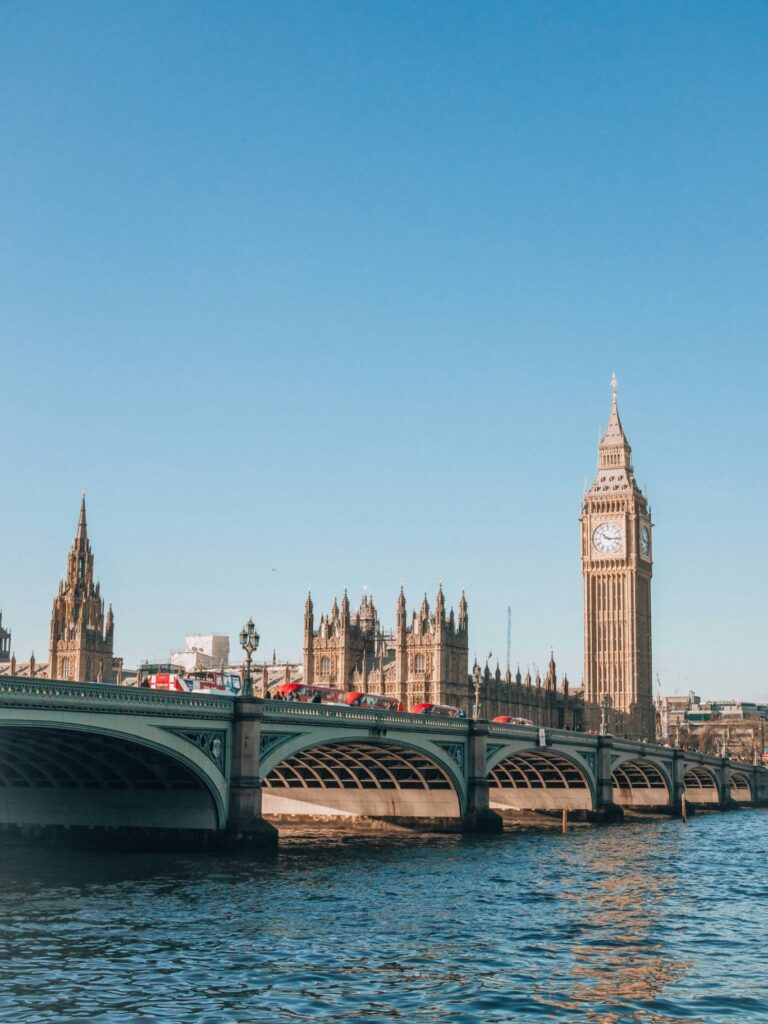
Located at the Palace of Westminster, the clock tower is officially called Elizabeth Tower. Big Ben is technically the name of the enormous bell inside it, although the nickname is commonly used for the entire tower.
The present Palace of Westminster was largely built during the 19th century after a devastating fire destroyed much of the earlier complex. Its Gothic Revival architecture makes it one of London's most recognisable and photographed buildings.
Why Is Big Ben So Famous?
Big Ben has become a worldwide symbol of London and Britain. Its clock faces, distinctive tower and famous chimes have appeared countless times in films, television programmes and photographs of the capital.
Visitors can admire it from several excellent viewpoints. Parliament Square provides a close-up perspective, while Westminster Bridge and the South Bank give you wider views that include the Houses of Parliament and the Thames.
It is also possible to explore parts of the Houses of Parliament on selected tours, while visits inside Elizabeth Tower require separate booking.
If you prefer exploring Westminster at your own pace rather than joining a group tour, you can download a self-guided London audio tour from WeGoTrip{LINK: WeGoTrip (wegotrip.com) — self-guided Westminster audio tour} and follow the route on your phone. WeGoTrip currently lists several London routes covering Westminster, royal landmarks and nearby attractions.
Best for: First-time visitors, architecture, history and photography.
2. Buckingham Palace
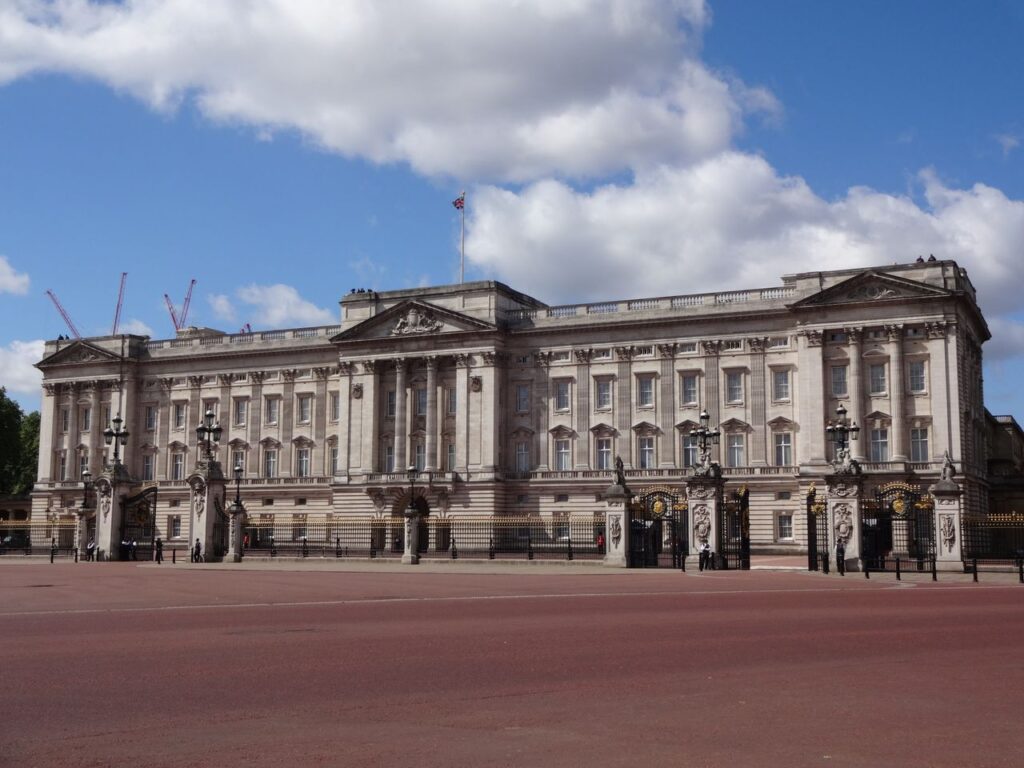
Buckingham Palace is one of the world's most famous royal residences and an essential stop for visitors interested in Britain's monarchy.
It is the official London residence of the King and remains a working royal palace used for ceremonies, official events and state occasions.
Visitors gather outside its famous gates to photograph the grand façade, the palace forecourt and the Victoria Memorial.
Can You Go Inside Buckingham Palace?
Yes. Parts of Buckingham Palace open to visitors during selected periods, particularly the State Rooms during the summer opening season.
Inside, visitors can see ceremonial rooms filled with works of art, ornate furnishings and objects from the Royal Collection.
Even when the interior is closed to visitors, the palace is worth including in a central London walking route because several other landmarks and green spaces are nearby.
The Changing of the Guard is another well-known London experience. Schedules can vary, so check the latest ceremony information before planning your day around it.
After seeing the palace, walk through nearby St James's Park or continue along The Mall toward Trafalgar Square.
Best for: Royal history, ceremonies and first-time London sightseeing.
3. Tower Bridge
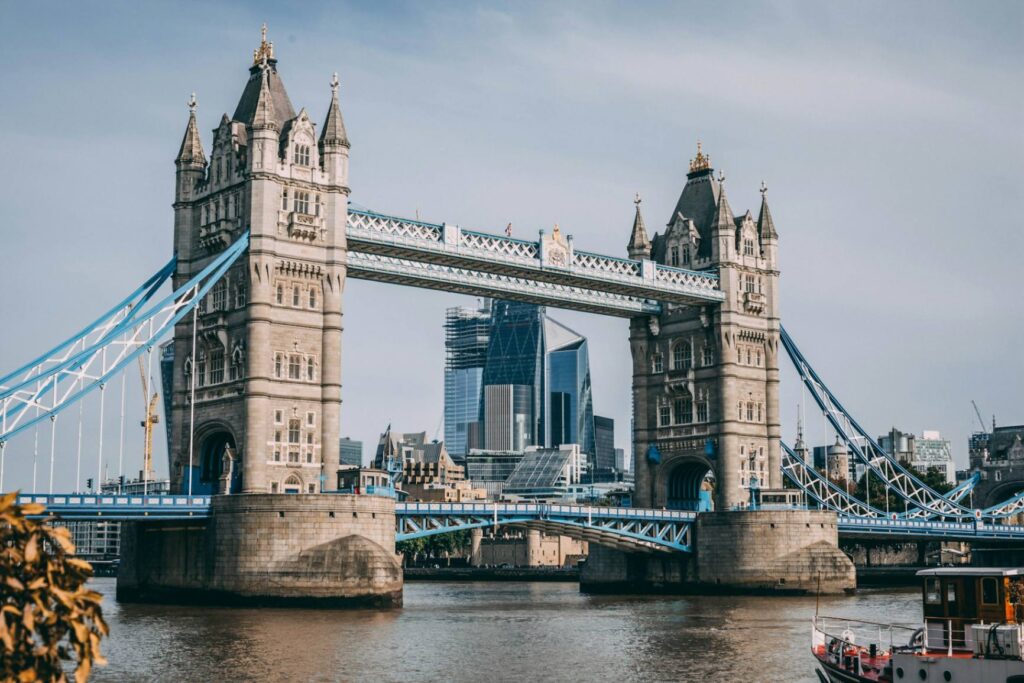
Tower Bridge is one of the most recognisable bridges in the world.
Completed during the Victorian era, its twin towers and distinctive bascule design created a crossing that was both functional and visually striking.
The bridge spans the Thames close to the Tower of London and has become one of the defining images of the capital.
Is Tower Bridge the Same as London Bridge?
No. Tower Bridge and London Bridge are two different crossings.
Tower Bridge is the ornate structure with two large towers that appears in countless London photographs. London Bridge is located farther west and has a much simpler modern design.
The confusion is common among first-time visitors, especially because London Bridge station is located relatively close to Tower Bridge.
What Can You Do at Tower Bridge?
You don't have to limit your visit to views from the riverbank.
Visitors can explore inside Tower Bridge, walk through its elevated walkways and look down through glass-floor sections high above the road and river.
The Victorian Engine Rooms reveal the machinery and engineering once used to operate the bridge.
For good photographs, walk along the riverside near the Tower of London or explore the southern bank around More London and Potters Fields Park.
Tower Bridge also works particularly well as part of a longer riverside walk linking the Tower of London, London Bridge, Borough Market and The Shard.
Best for: Photography, engineering, architecture and Thames views.
4. Tower of London
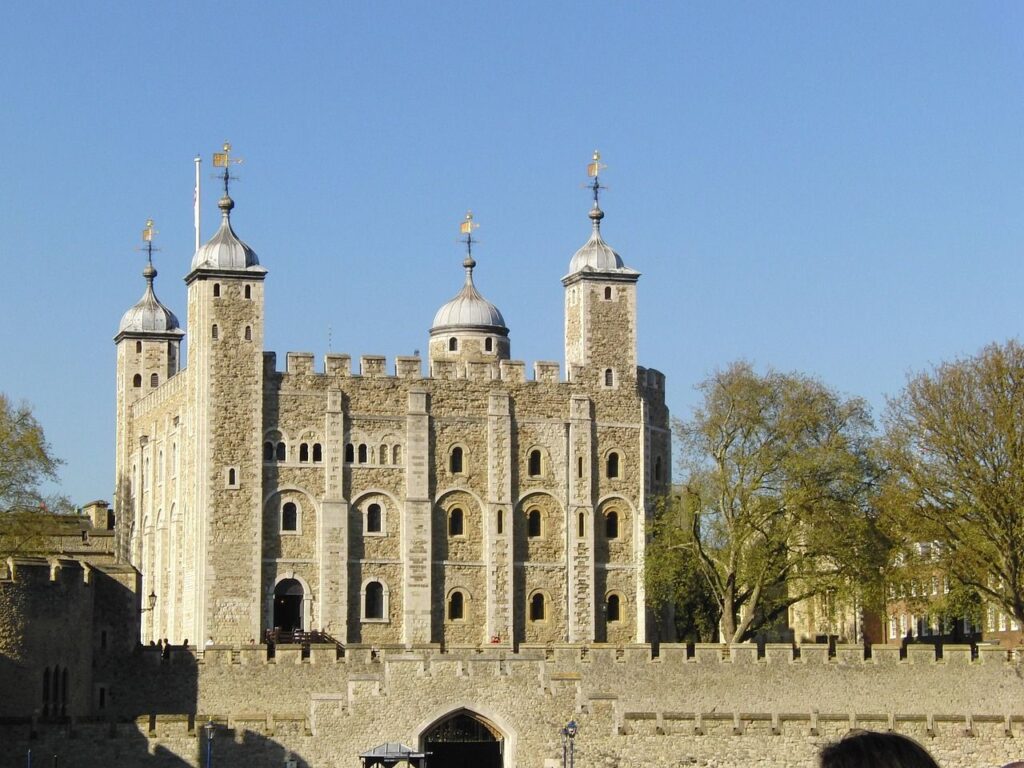
A short walk from Tower Bridge is a landmark with nearly a millennium of dramatic history: the Tower of London.
Founded after the Norman Conquest, the complex has served many purposes over the centuries. It has been a royal residence, fortress, armoury, treasury and prison.
Its walls are associated with kings, queens, political intrigue, imprisonment and some of the darkest episodes in English history.
What Is the Tower of London Famous For?
One of its biggest attractions is the Crown Jewels, a collection of ceremonial objects connected with the British monarchy.
Visitors can also meet the Yeoman Warders, commonly called Beefeaters, and hear stories about the people who lived, worked or were imprisoned within the fortress.
Then there are the Tower's famous ravens. According to legend, disastrous consequences would follow if the ravens ever left the fortress, adding another layer of mythology to the site's long history.
Allow several hours if you want to explore the Tower properly rather than simply seeing it from outside.
It is also worth checking whether several paid attractions on your itinerary are included in a London pass from Go City. Its current London attraction list includes the Tower of London, Tower Bridge, St Paul's Cathedral and the London Eye, among other sights, although reservation requirements differ between attractions.
Best for: British history, families, royal heritage and medieval architecture.
5. The London Eye
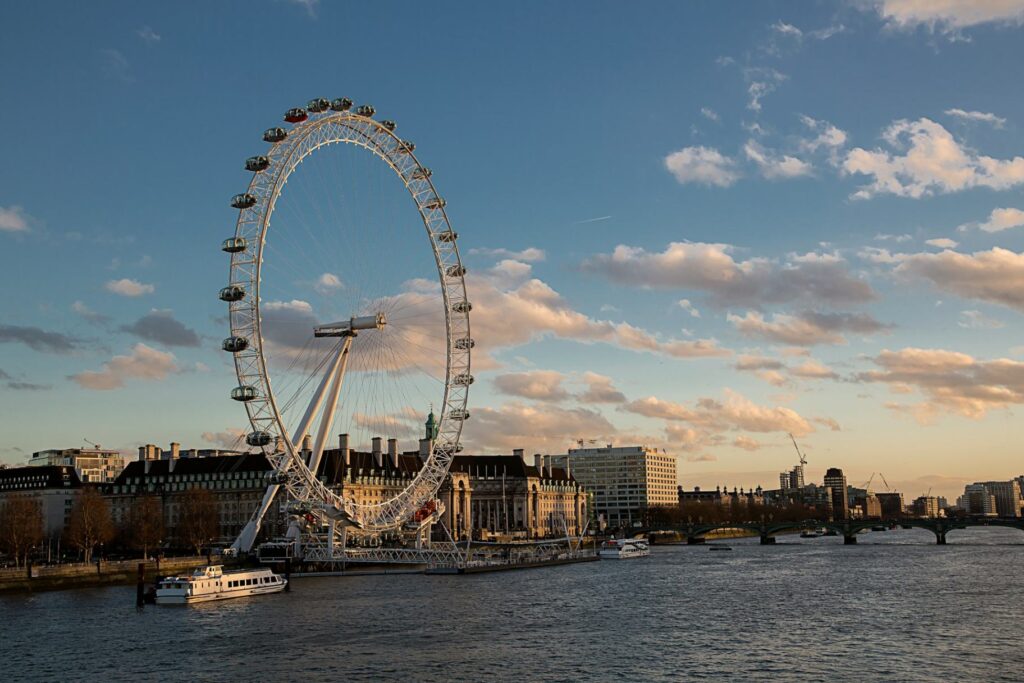
For a completely different view of London's landmarks, head to the London Eye.
Standing beside the Thames on the South Bank, this enormous observation wheel offers sweeping views across the capital.
The gradual rotation gives visitors time to identify buildings and take photographs as London unfolds below.
What Landmarks Can You See From the London Eye?
On a clear day, you can spot numerous famous sights, including the Houses of Parliament and Big Ben immediately across the river.
The view also stretches towards landmarks such as Buckingham Palace, St Paul's Cathedral and The Shard.
A ride near sunset can be particularly attractive as daylight fades and the city's buildings begin to illuminate.
The London Eye's central location also makes it easy to combine with Westminster, the South Bank and nearby cultural attractions.
Because entry uses selected time slots, it is sensible to reserve your London Eye ticket through Klook before a busy sightseeing day. Klook currently lists standard and fast-track London Eye tickets as well as several combination options.
Best for: Panoramic views, couples, families and first-time visitors.
6. Westminster Abbey
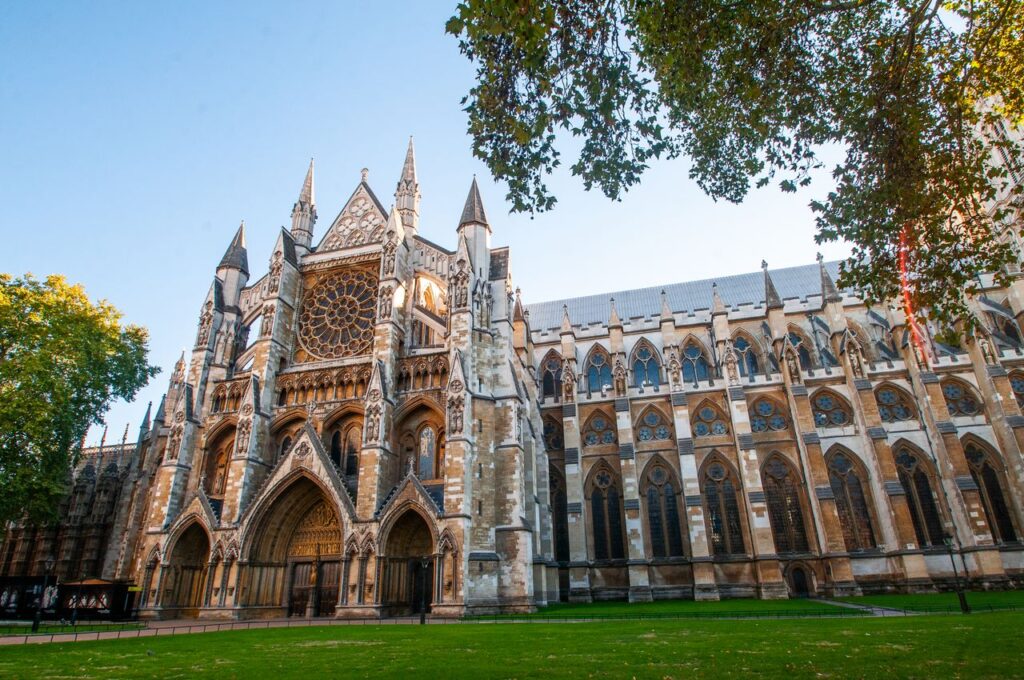
Westminster Abbey has played a central role in British royal history for centuries.
Located only a short walk from Big Ben, this Gothic church has hosted coronations, royal weddings and major national ceremonies.
British monarchs have been crowned here since the 11th century, making it one of the country's most historically significant religious buildings.
Why Visit Westminster Abbey?
Inside you'll find elaborate architecture, historic chapels, monuments and memorials dedicated to important figures from Britain's past.
Kings and queens are buried here alongside influential writers, scientists, politicians and military leaders.
Poets' Corner is particularly famous for its connections with some of Britain's greatest literary figures.
Even visitors with limited interest in royal history often find plenty to appreciate in the Abbey's architecture, craftsmanship and centuries of historical detail.
Its location is another advantage. Big Ben, the Houses of Parliament and Parliament Square are all nearby, so Westminster Abbey fits naturally into a walking tour of central London.
Best for: Architecture, royal history, religion and literature.
7. St Paul's Cathedral
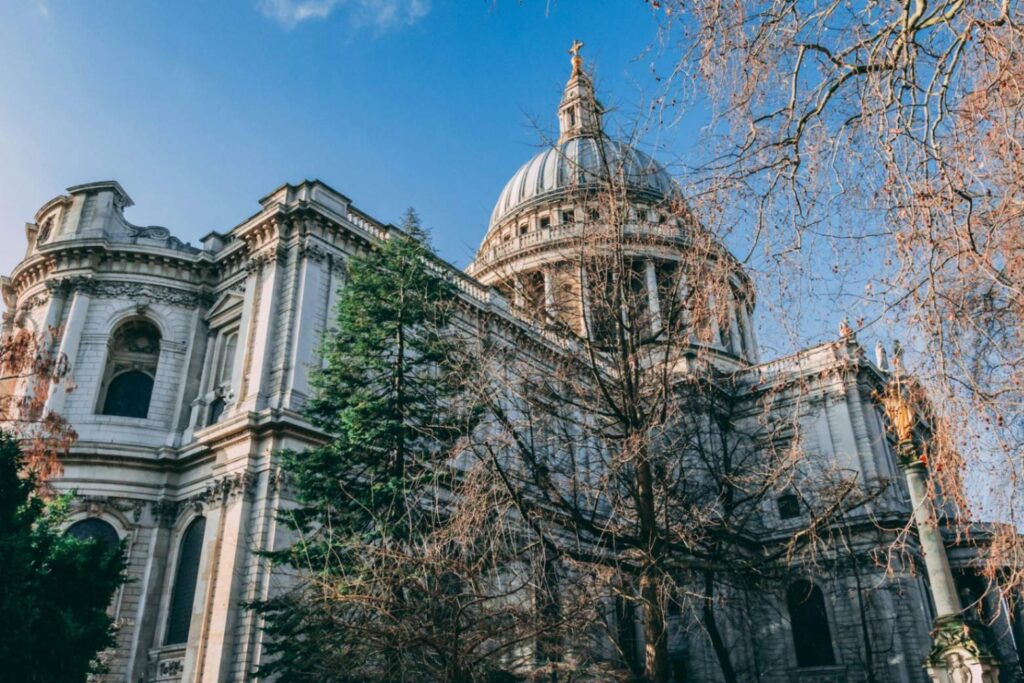
The great dome of St Paul's Cathedral has defined London's skyline for centuries.
The present cathedral was designed by architect Sir Christopher Wren following the Great Fire of London in 1666.
Its soaring dome and grand interior make St Paul's one of the city's most important architectural landmarks.
What Should You See at St Paul's Cathedral?
Inside, visitors can explore the cathedral floor, admire its decorative details and learn about the people and events connected with St Paul's.
The cathedral has hosted major national occasions and remains an active place of worship.
One of the biggest rewards for visitors willing to climb is the opportunity to experience the cathedral's galleries and elevated views.
Outside, cross the Millennium Bridge toward Tate Modern and turn around for one of the classic views of St Paul's.
The cathedral can easily be combined with Tate Modern, Shakespeare's Globe and a walk along the Thames, making this part of London particularly convenient for sightseeing on foot.
Best for: Architecture, London history and panoramic city views.
8. The British Museum
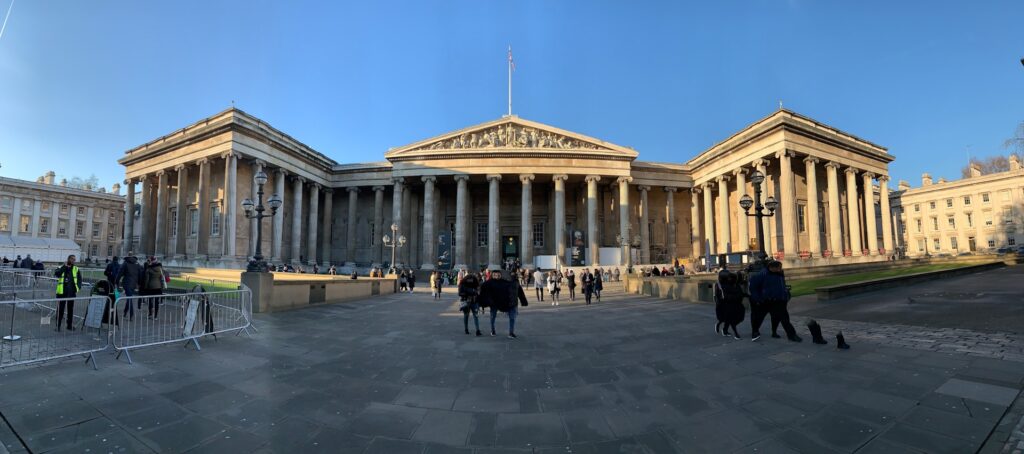
Not every famous London landmark is a palace, bridge or historic church.
The British Museum has become a cultural landmark in its own right, attracting visitors who want to explore thousands of years of human history under one roof.
Its vast collection covers civilisations from different parts of the world and spans an extraordinary period of human history.
What Are the Most Famous Things in the British Museum?
Among its best-known objects is the Rosetta Stone, which played an important role in deciphering ancient Egyptian hieroglyphs.
The museum is also famous for its Egyptian collection, classical antiquities and objects from numerous world cultures.
Its striking Great Court is another highlight and provides an architectural contrast to the historic galleries surrounding it.
General access to the museum's permanent collection is normally free, although special exhibitions and certain experiences may require tickets or advance reservations.
Because the collection is enormous, first-time visitors may find it easier to choose a few galleries rather than attempting to see everything in one visit.
If you want more context without joining a conventional guided group, WeGoTrip also offers self-guided British Museum audio experiences that can be downloaded to a phone.
Best for: History, culture, rainy days and budget-conscious travellers.
9. Trafalgar Square
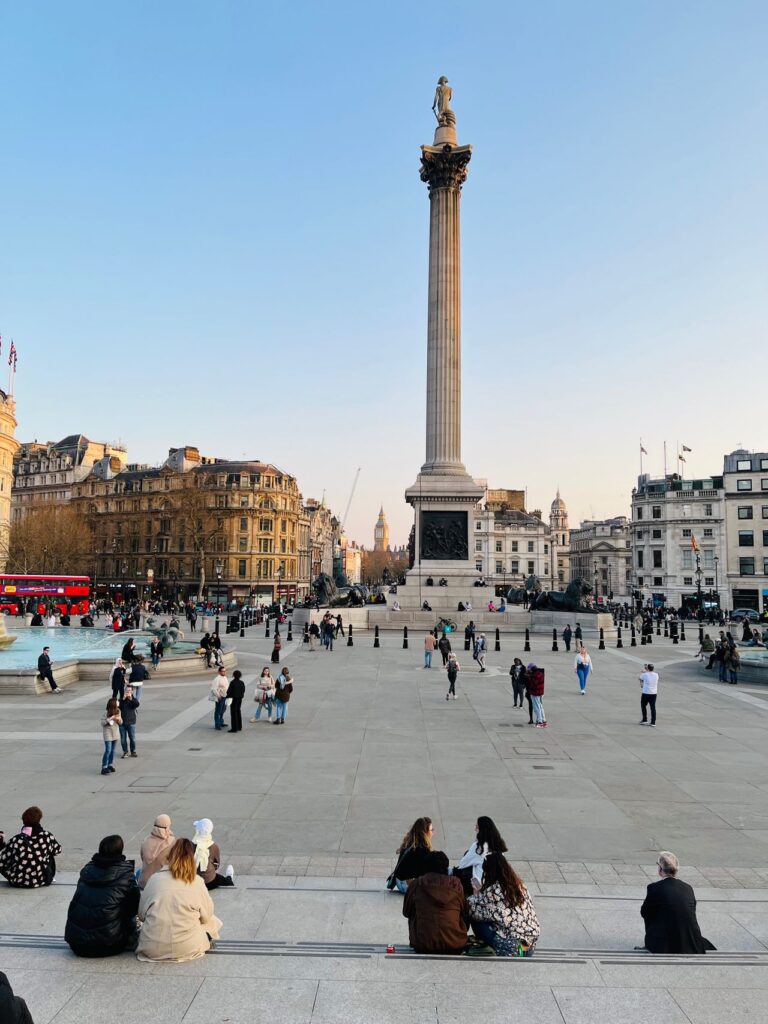
Trafalgar Square is more than a sightseeing stop. It is one of London's most important public spaces.
At its centre stands Nelson's Column, surrounded by famous lion sculptures and fountains.
The square commemorates Britain's victory at the Battle of Trafalgar and has since become a focal point for celebrations, public gatherings, cultural events and demonstrations.
What Can You See Near Trafalgar Square?
The National Gallery overlooks the square, making it easy to add world-class art to your sightseeing day.
From Trafalgar Square, you can walk toward several well-known parts of central London, including Covent Garden, Leicester Square and Whitehall.
Walk down Whitehall and you'll eventually reach Parliament Square, Big Ben and Westminster Abbey.
Head in the opposite direction and you'll quickly reach the West End.
That connectivity makes Trafalgar Square a useful landmark around which to build a central London walking route.
It also works well as a transition point between a Westminster sightseeing day and an evening in Covent Garden, Soho or the theatre district.
Best for: Walking tours, photography, art and people-watching.
10. The Shard
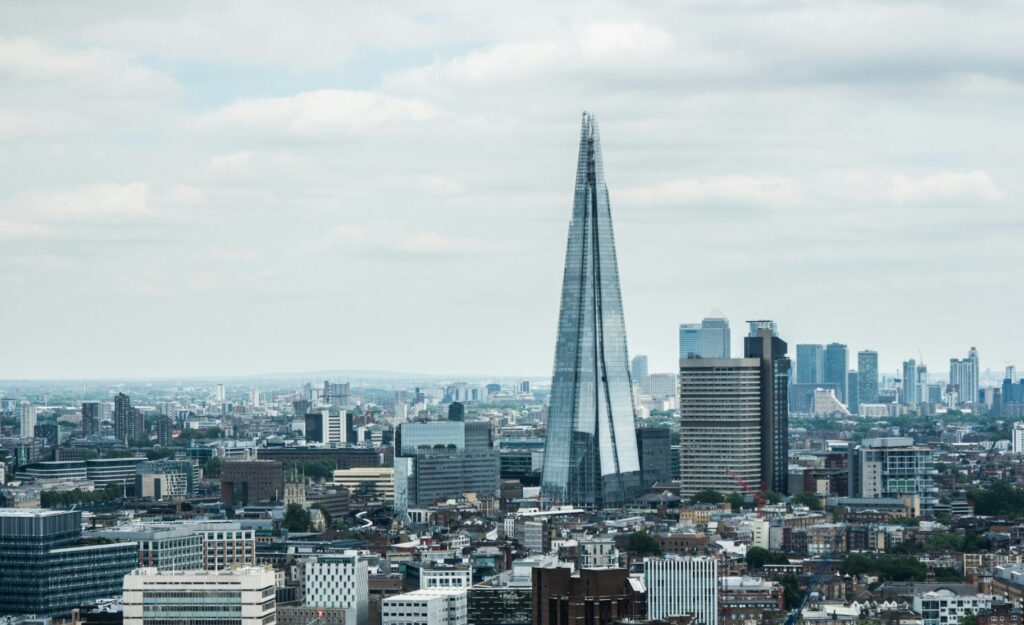
London isn't defined only by centuries-old architecture.
The Shard represents the city's modern side.
Rising above the London Bridge area, the glass-covered skyscraper is one of the most distinctive features of the contemporary London skyline.
Its pointed design makes it easy to recognise from viewpoints across the city.
Why Visit The Shard?
Visitors primarily come for the panoramic views.
From high above London, you can appreciate the scale of the city and see how historic buildings, modern towers, bridges and the River Thames fit together.
The surrounding neighbourhood is worth exploring too.
Borough Market is nearby, while Tower Bridge and the Tower of London can be reached by walking east along the river.
This makes The Shard easy to combine with several other famous London landmarks without spending much time travelling between them.
If you are planning a full day in this area, start around Borough Market or London Bridge, continue toward Tower Bridge and the Tower of London, then return toward The Shard later in the day.
Best for: Skyline views, modern architecture and special occasions.
11. Natural History Museum
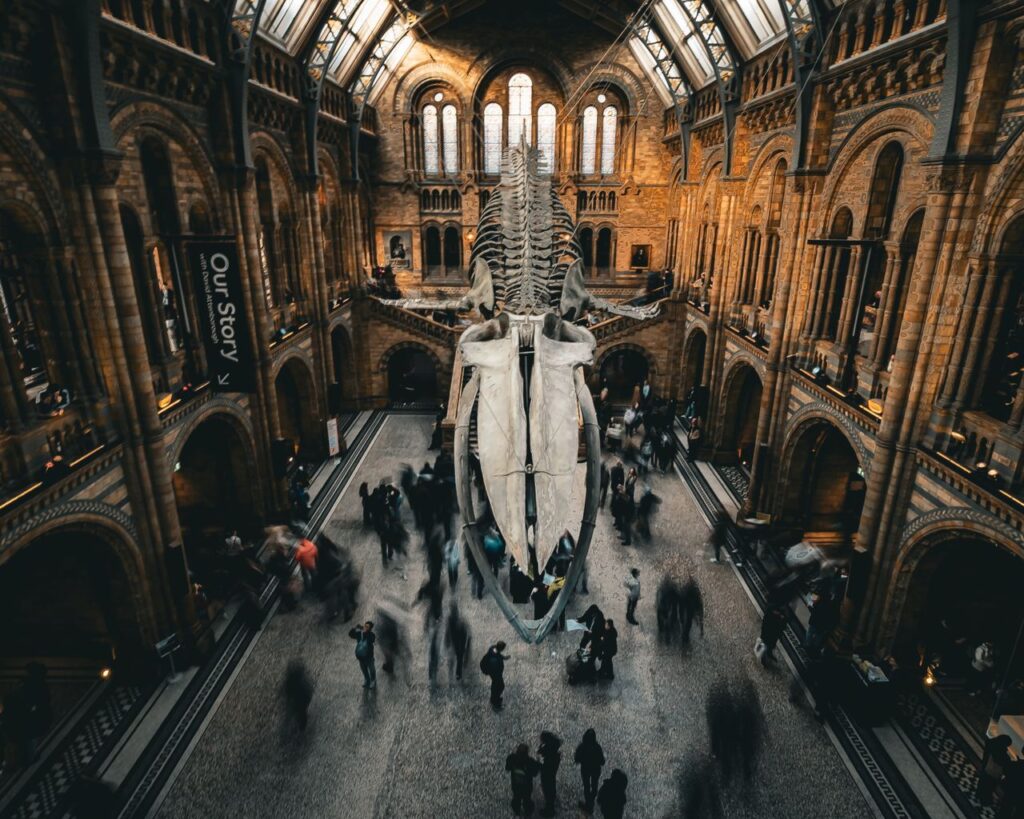
Even before you step inside the Natural History Museum, the building itself feels like an attraction.
Its Romanesque-style façade, detailed stonework, towers and vast central hall give it the appearance of an elaborate cathedral devoted to the natural world.
Located in South Kensington, it is especially popular with families but has plenty to offer visitors of every age.
What Can You See at the Natural History Museum?
The museum explores everything from dinosaurs and prehistoric life to geology, biodiversity, evolution and the natural forces that shape our planet.
Its dinosaur displays are perennial favourites, while the vast Hintze Hall creates one of London's most memorable museum entrances.
The museum's permanent collections can generally be visited without paying a standard admission charge, although some exhibitions and events may be ticketed.
Nearby you'll also find the Science Museum and Victoria and Albert Museum, making South Kensington an excellent destination for a museum-focused day.
If you are interested in all three museums, allow plenty of time rather than trying to cover every gallery in a single visit.
Best for: Families, science, architecture and free attractions.
12. Tate Modern
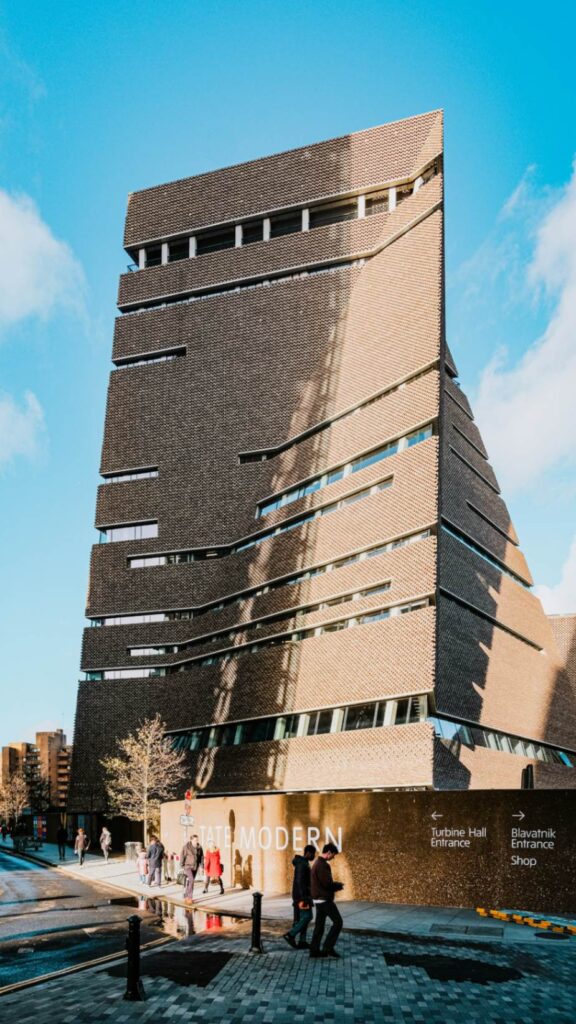
Standing inside a former power station beside the Thames, Tate Modern is one of London's most distinctive cultural landmarks.
Its industrial architecture gives the gallery a character completely different from the city's traditional museums.
Inside, visitors encounter modern and contemporary art by artists from Britain and around the world.
Why Is Tate Modern Worth Visiting?
One of the building's defining spaces is the enormous Turbine Hall, which has become famous for large-scale art installations.
Much of Tate Modern's collection can normally be explored without a general admission charge, although certain temporary exhibitions require paid tickets.
The riverside location is another major attraction.
Step outside and the Millennium Bridge leads directly toward St Paul's Cathedral on the opposite side of the Thames.
Walking along the South Bank from Tate Modern also puts you within reach of Shakespeare's Globe, Borough Market and other popular sights.
This section of the Thames is especially good for travellers who prefer connecting several landmarks on foot rather than travelling between isolated attractions.
Best for: Modern art, architecture, culture and Thames walks.
Which London Landmarks Should First-Time Visitors Prioritise?
If you're visiting London for the first time and have limited time, prioritise Big Ben, Buckingham Palace, Tower Bridge, the Tower of London, Westminster Abbey and the London Eye.
These attractions combine some of the city's strongest royal, political, historical and architectural experiences.
Start in Westminster to see Big Ben, the Houses of Parliament and Westminster Abbey. From there, walk toward Buckingham Palace or cross the Thames to the London Eye.
On another half-day, travel east to the Tower of London and Tower Bridge.
If you have additional time, continue along the river toward Borough Market and The Shard, or head west toward St Paul's Cathedral and Tate Modern.
This approach reduces unnecessary travel and gives you more time to actually explore each area.
How Many London Landmarks Can You See in One Day?
You can comfortably see the exterior of five to eight major London landmarks in one day if you plan an efficient walking and public-transport route.
However, visiting the interiors of multiple attractions takes considerably longer.
For example, exploring the Tower of London properly can occupy several hours, while Westminster Abbey, St Paul's Cathedral and London's major museums also deserve sufficient time.
If you have only one day in London, focus on seeing a greater number of landmarks from outside and choose one or two attractions for detailed visits.
If you have three or four days, you can slow the pace, explore more interiors and spend time in museums without turning every day into a race between attractions.
Best Areas for Seeing Several London Landmarks
Westminster
Westminster is one of the most convenient areas for first-time sightseeing.
Within a relatively compact area you can see:
- Big Ben
- Houses of Parliament
- Westminster Abbey
- London Eye
- Buckingham Palace
- St James's Park
Walking between these landmarks is often part of the experience. The route also passes squares, government buildings, riverside viewpoints and several green spaces.
A typical Westminster sightseeing route can begin at Parliament Square, continue past Westminster Abbey and Buckingham Palace, then finish on the South Bank near the London Eye.
Tower and London Bridge
Travel east along the Thames and another group of major attractions appears:
- Tower of London
- Tower Bridge
- The Shard
- Borough Market
- Thames riverside walks
This area combines medieval history with some of modern London's most recognisable architecture.
The distances between major sights are manageable on foot, and the Thames provides an easy reference point when navigating.
City of London and South Bank
Around the central Thames, you can connect:
- St Paul's Cathedral
- Millennium Bridge
- Tate Modern
- Shakespeare's Globe
- South Bank attractions
The area is particularly enjoyable on foot because the river provides a natural sightseeing route.
Crossing the Millennium Bridge also gives you one of the most recognisable perspectives of St Paul's Cathedral, while the south side of the river leads toward Borough Market and London Bridge.
Tips for Visiting Famous London Landmarks
A little planning can make sightseeing in London significantly easier.
Book major attractions in advance. Timed-entry tickets are common, and popular periods can sell out. If you plan to visit several paid landmarks rather than one individual attraction, compare the included sights on Go City before buying separate tickets, since coverage and reservation requirements vary.
Group landmarks by location. Avoid crossing London repeatedly. Explore Westminster together, then dedicate another part of your trip to Tower Bridge, the City of London or South Kensington.
Walk when practical. Many famous London sights are surprisingly close together, and walking often reveals streets, gardens, architecture and river views that you would miss underground.
Use public transport for longer distances. London's Underground and bus network can quickly connect sightseeing areas that are too far apart to walk comfortably.
Check opening hours before leaving. Seasonal schedules, ceremonies, maintenance, religious services and special events can affect access.
Check reservation rules, not just opening times. Some attractions allow walk-up admission, while others use timed entry or require advance reservations during busy periods.
Wear comfortable shoes. A London sightseeing day can involve considerably more walking than expected, even when you use the Underground between different parts of the city.
Allow extra time at major attractions. Security checks, queues and the size of places such as the Tower of London or the British Museum can make visits longer than they appear on a map.
Leave room for spontaneity. Some of London's most enjoyable discoveries happen between the major attractions, from riverside views and historic streets to parks, markets and smaller architectural details.
Conclusion: Discover the Landmarks That Define London
From the unmistakable clock face of Big Ben to the towers of Tower Bridge, London's landmarks reflect centuries of history alongside a constantly evolving modern city.
First-time visitors can begin with royal and political icons such as Buckingham Palace, Westminster Abbey and the Houses of Parliament, before following the Thames toward the Tower of London, St Paul's Cathedral, Tate Modern and The Shard.
You don't need to experience all 12 famous London landmarks in a single day. Grouping attractions by neighbourhood gives you more time to appreciate each place and discover the streets, parks, markets and riverside views between them.
If your priority is history, spend more time around Westminster and the Tower of London. For art and museums, combine the British Museum, Tate Modern or the South Kensington museums. For city views, consider the London Eye, The Shard and the Thames bridges.
London works particularly well when its landmarks are treated as connected parts of the city rather than a checklist. Plan around two or three geographical areas each day, choose the attractions you genuinely want to enter, and leave enough time to explore what lies between them.
Frequently Asked Questions
What Is the Most Famous Landmark in London?
Big Ben is widely considered one of London's most famous and recognisable landmarks. Tower Bridge, Buckingham Palace and the London Eye are also internationally recognised symbols of the city.
What Are the Top Landmarks to See in London?
Some of the top landmarks to see in London include Big Ben, Buckingham Palace, Tower Bridge, the Tower of London, Westminster Abbey, the London Eye and St Paul's Cathedral. First-time visitors with limited time can concentrate on Westminster and the Tower Bridge area, where several major sights are located close together.
Which London Landmarks Are Free to Visit?
Several famous outdoor landmarks can be viewed for free, including Big Ben, Buckingham Palace, Tower Bridge and Trafalgar Square. Major museums including the British Museum, Natural History Museum and Tate Modern also generally provide free access to their permanent collections, although some exhibitions, special events or experiences may charge admission. Remember that viewing Tower Bridge from outside is free, while entering the Tower Bridge exhibition is a paid experience.
What London Landmarks Are Close Together?
Big Ben, Westminster Abbey and the Houses of Parliament are extremely close together. Buckingham Palace and the London Eye are also within walking distance of the Westminster area. Tower Bridge, the Tower of London, Borough Market and The Shard form another convenient sightseeing cluster farther east. St Paul's Cathedral, Millennium Bridge and Tate Modern can also be combined easily on foot.
Can You See London's Main Landmarks in One Day?
Yes. You can see many of London's main landmarks from the outside in o However, visiting the interiors of several major attractions will require considerably more time.ne day by following an efficient route. For a one-day visit, it is more realistic to choose one or two paid attractions and see the remaining landmarks from outside.
What Is the Best Way to Travel Between London Landmarks?
Walking is often best for landmarks located within the same central area. For longer journeys, the London Underground and buses are usually convenient. River services can also provide a scenic way to travel between parts of central London. A good strategy is to walk within sightseeing clusters and use public transport only when moving between areas such as Westminster, South Kensington and Tower Bridge.
What Is the Best Area of London for First-Time Sightseeing?
Westminster is an excellent starting point because Big Ben, the Houses of Parliament, Westminster Abbey, Buckingham Palace and the London Eye are all located within or close to the area. It is also well connected to other parts of central London by Underground, buses and walking routes.