
Affiliate Note: Some links may be affiliate links. We may earn a small commission at no extra cost to you, and we only share recommendations we believe are useful.
Sedona to Grand Canyon Drive Stops: Route, Distance, and What to Expect
Driving from Sedona to the Grand Canyon takes a little over two hours without stops, but treating it as a simple transfer means skipping some of northern Arizona's most interesting scenery. The route moves from Sedona's red-rock landscape through Oak Creek Canyon, Flagstaff's ponderosa forests, the open Colorado Plateau, and finally the South Rim.
The direct route to Grand Canyon National Park's South Rim is roughly 110 to 120 miles, depending on your starting point in Sedona and where you finish inside the park. Most travelers follow AZ-89A through Oak Creek Canyon, continue through Flagstaff, then take US-180 and AZ-64 toward Grand Canyon Village.
The seven stops below fit naturally along that route. Some require only 15 to 30 minutes, while Slide Rock State Park, Flagstaff, and the Museum of Northern Arizona can take much longer. Choose two or three for a day trip, or build in most of them if you're staying overnight near the canyon.
Table of Contents
Sedona to Grand Canyon Drive: Route, Distance, and What to Expect
For most visitors, the most scenic direct route begins on AZ-89A, which climbs through Oak Creek Canyon toward Flagstaff. From Flagstaff, continue northwest on US-180 and connect with AZ-64 toward Tusayan and the South Entrance of Grand Canyon National Park.
Driving straight through usually takes around two to two and a half hours in good conditions. Traffic, construction, snow, busy parking areas, and congestion at the park entrance can extend the trip.
The biggest scenery change comes early. AZ-89A runs below steep canyon walls before climbing through switchbacks toward Flagstaff. Red sandstone gradually gives way to ponderosa forest, cooler temperatures, volcanic terrain, and views toward the San Francisco Peaks. North of Flagstaff, the landscape opens into high-country grassland and forest before reaching the Grand Canyon.
Elevation also affects the weather. Sedona can be warm while Flagstaff and the South Rim are cold, windy, or snowy on the same day. Pack layers rather than dressing only for your departure point.
If you're flying into Arizona and planning this as a self-drive trip, you can compare rental cars on Economybookings.com before arrival so you can choose a vehicle that suits the route and season.
Download offline maps before leaving Sedona because mobile coverage can weaken on rural stretches. Fill the fuel tank, carry water, and leave enough flexibility for crowded parking areas or weather changes.
Stop 1: Oak Creek Canyon
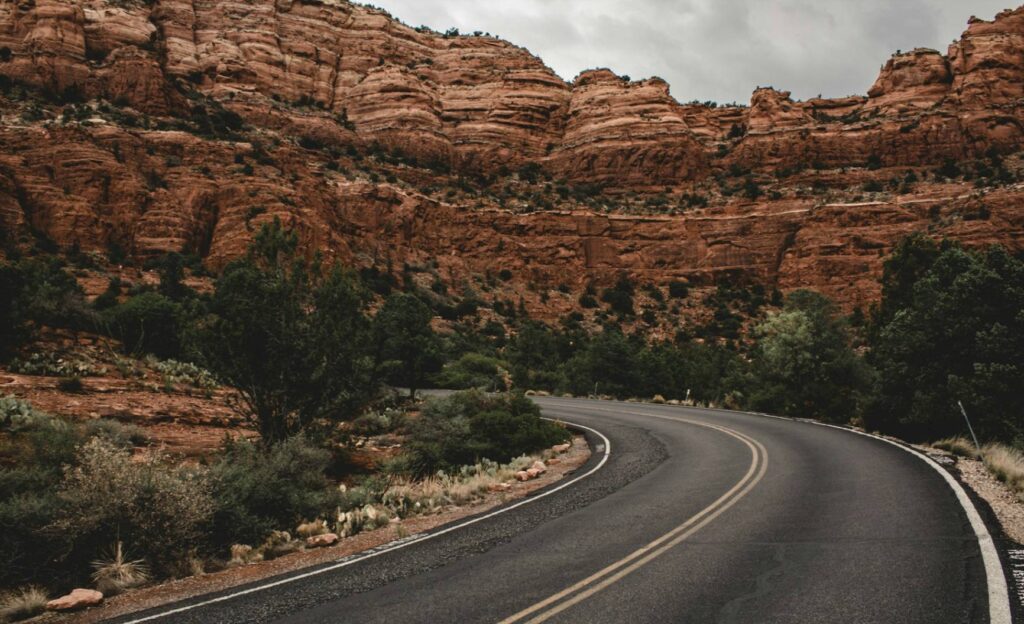
Oak Creek Canyon begins immediately north of Sedona and forms the first scenic section of the drive. AZ-89A follows Oak Creek between sandstone cliffs, forests, and steep canyon walls before climbing toward the rim.
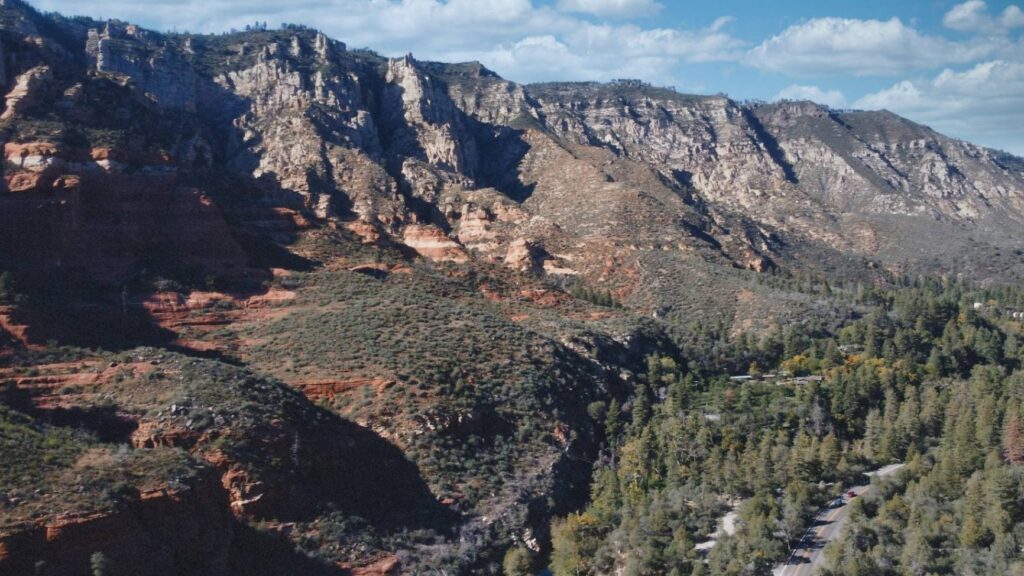
It works well as a flexible stop because you do not need to commit to a specific attraction. Travelers focused on reaching the Grand Canyon early can simply enjoy the drive and use a designated pullout. Those with more time can stop near the creek, take photographs, picnic, or explore a recreation area.
The road is paved but includes curves, narrow sections, and later a series of switchbacks. Stay focused on driving and stop only where parking is permitted. Weekends, holidays, and warm-weather days can bring heavy traffic and limited parking.
Oak Creek Canyon is also where the route's elevation change becomes obvious. Within a relatively short distance, Sedona's open red-rock landscape begins transitioning into cooler forest.
What to See and Do in Oak Creek Canyon
Oak Creek itself is the main attraction. Depending on where you stop, you may find water running beneath cottonwoods, sycamores, and evergreens with red cliffs rising behind them.
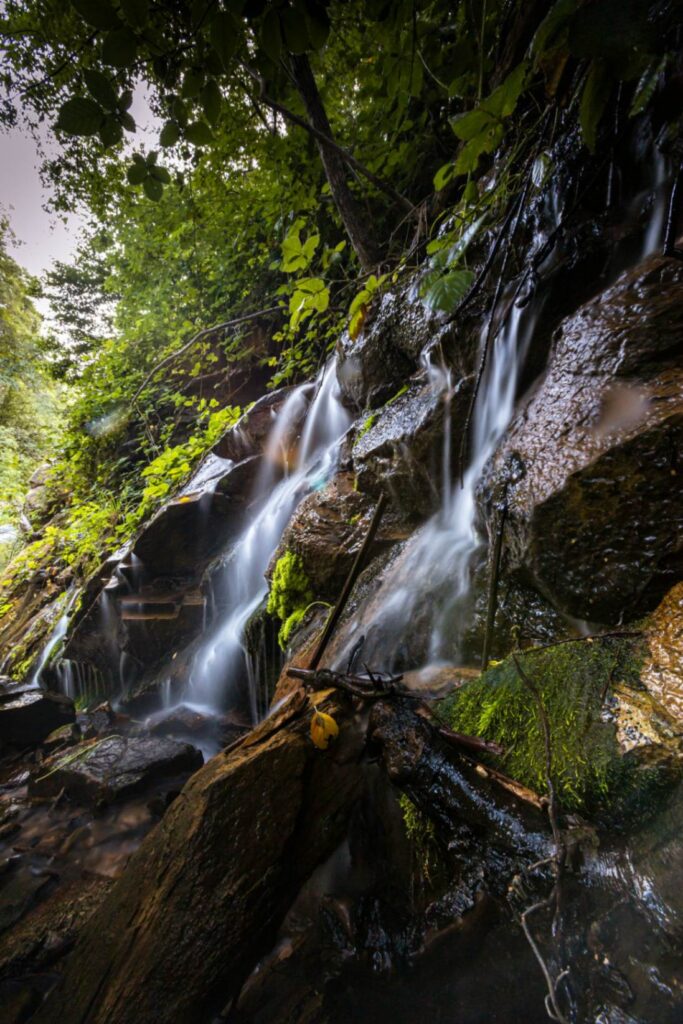
Morning often works well for photography because lower-angle light can bring out more detail in the rock and foliage. Fall adds yellow and orange leaves, while spring brings greener vegetation along the creek.
Families can use Oak Creek Canyon as an early break from the car. Even 20 or 30 minutes beside the water can make the drive feel less like a long highway transfer.
Access and fees vary among recreation areas, so check current forest and road information if you plan to stop somewhere specific. For most road-trip itineraries, 30 to 60 minutes is enough unless hiking or picnicking is a priority.
Stop 2: Slide Rock State Park
A few miles north of Sedona, Slide Rock State Park is one of the most active stops on the route. Oak Creek runs across smooth sandstone here, creating natural sliding areas that attract swimmers during warm weather.
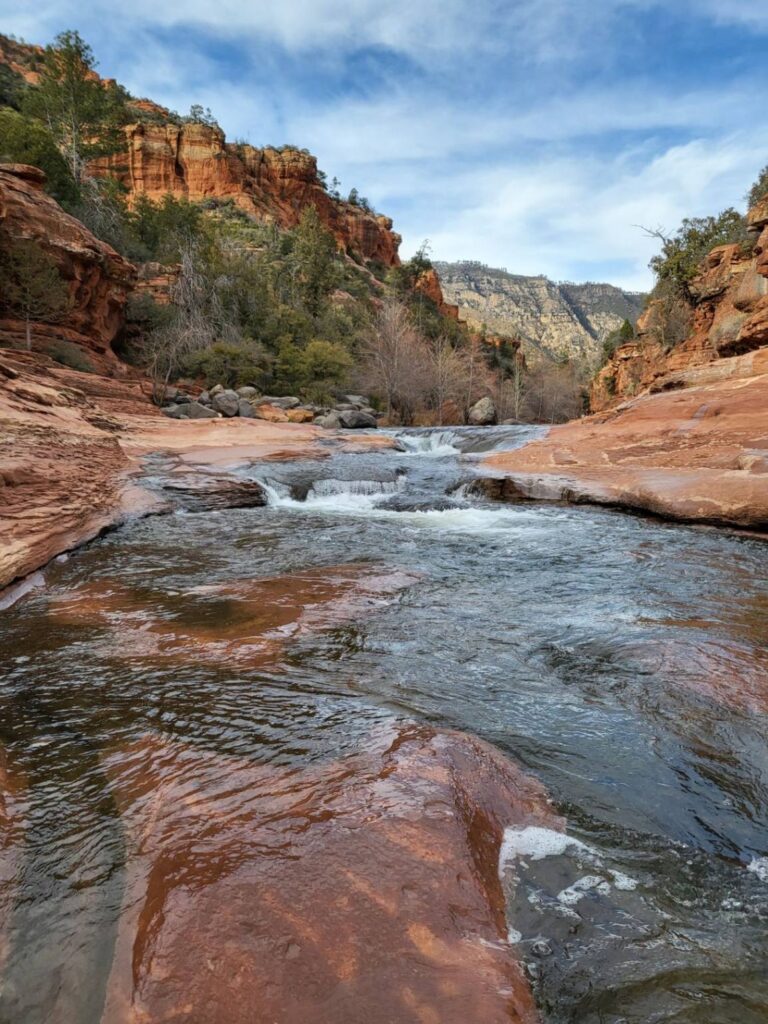
The park also preserves part of a historic apple farm, so the site includes orchard and agricultural history alongside the creek and canyon scenery.
Unlike a roadside overlook, Slide Rock requires time. Parking, walking to the water, and exploring the park can easily take an hour, while summer visitors who plan to swim may stay for several hours. If your priority is reaching the Grand Canyon early for hiking or sunset, consider skipping it.
Conditions change seasonally. Water can be cold, sandstone can be slippery, and swimming is not equally practical throughout the year. Wear footwear with good traction and follow posted safety guidance.
For families or travelers who have not spent much time around Sedona's creeks, Slide Rock can be one of the most enjoyable stops between Sedona and the Grand Canyon. If you've already explored similar areas around Sedona, use that time farther north instead.
Stop 3: Oak Creek Vista
Near the top of the switchbacks on AZ-89A, Oak Creek Vista provides a broad view back across the canyon you have just driven through.
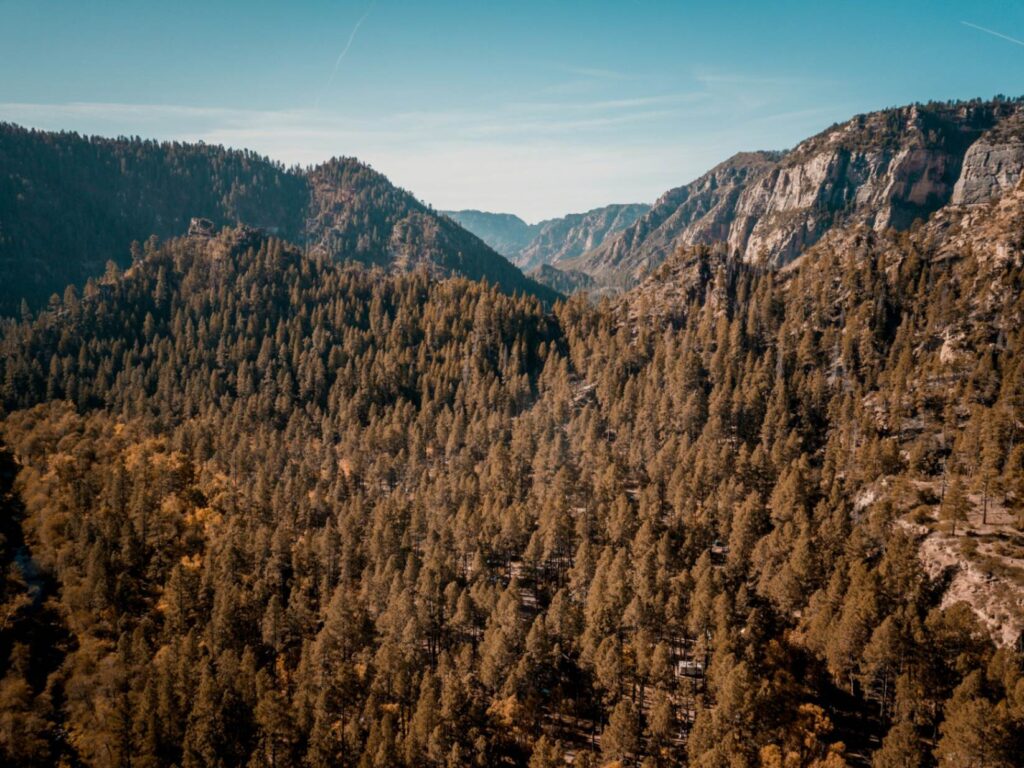
This stop requires little time. Park, walk to the viewpoint, photograph the canyon, stretch your legs, and continue toward Flagstaff. Twenty to 30 minutes is enough for most travelers.
The elevation difference is noticeable here. Temperatures are often cooler than in Sedona, and the surrounding vegetation marks the transition into northern Arizona's higher forests.
Oak Creek Vista can be busy, particularly during popular travel periods. Enter and exit carefully. In winter, check road conditions before driving AZ-89A because snow and ice can affect the upper canyon even when Sedona is clear.
If you want one short scenic stop without losing much time, Oak Creek Vista is one of the easiest choices on the entire route.
Stop 4: Flagstaff
Roughly midway between Sedona and the Grand Canyon, Flagstaff is the most practical place for fuel, food, coffee, and supplies. At about 7,000 feet in elevation, the city feels very different from Sedona, with ponderosa forest, historic brick buildings, cooler mountain weather, and Route 66 heritage.
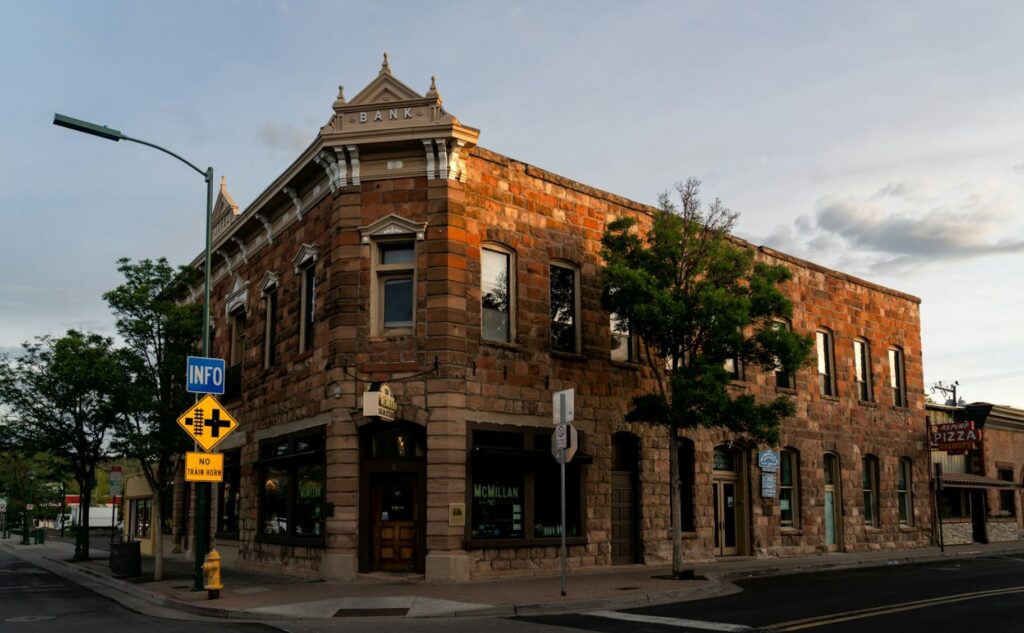
For a short stop, head toward historic downtown, get coffee or breakfast, walk a few blocks, and continue. Restaurants, cafés, shops, and galleries are concentrated enough that you do not need a complicated itinerary.
With more time, Flagstaff can easily become a destination on its own. Lowell Observatory, local trails, parks, museums, and historic sites can fill several hours. If this is your only Grand Canyon day, choose one priority rather than trying to see everything.
Flagstaff is also a good place to refuel, buy picnic supplies, and check conditions at the South Rim. Temperatures there may be considerably colder than in Sedona.
How to Make the Most of a Short Flagstaff Stop
The easiest way to keep Flagstaff from taking over the day is to choose one purpose: eat, walk downtown, buy supplies, or visit one attraction.
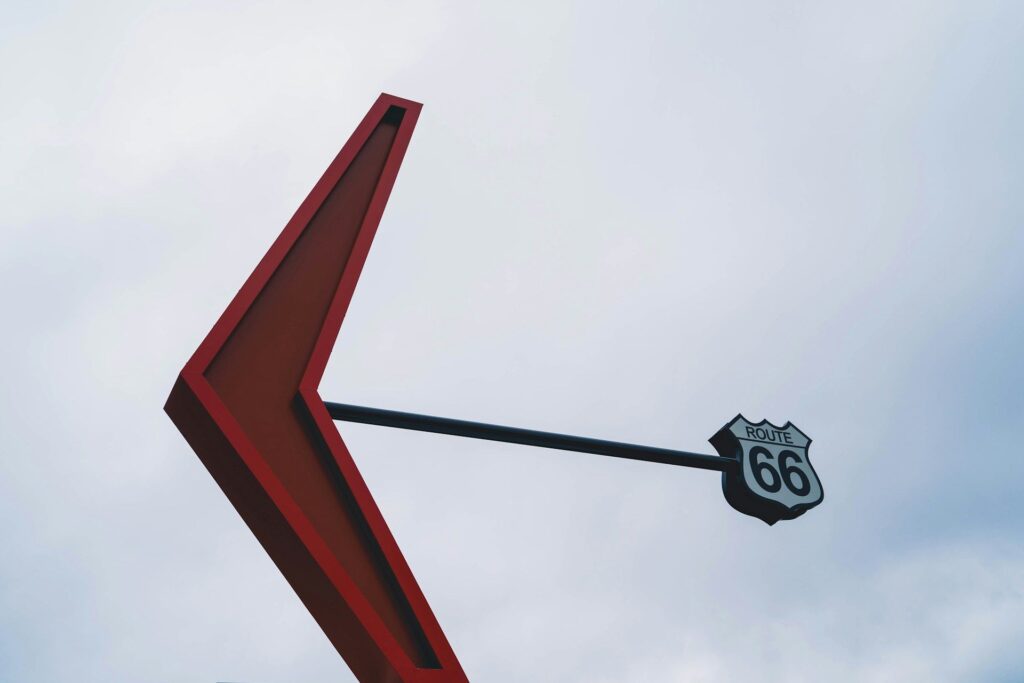
Historic downtown works especially well because food, coffee, shops, and Route 66 character are close together. It also provides a change of pace after the scenic drive through Oak Creek Canyon.
Before leaving, check the weather and road conditions farther north. In colder months, this is the right place to reassess whether you need warmer layers or whether snow could affect the route.
If you're using your phone for live navigation rather than relying entirely on downloaded maps, setting up an Airalo eSIM can help keep maps, messages, and travel apps available when you have cellular coverage.
Buying lunch or picnic supplies in Flagstaff can also save time later, particularly when restaurants near the South Rim are busy.
Stop 5: Museum of Northern Arizona
The Museum of Northern Arizona, on the north side of Flagstaff, is a useful cultural stop near the route toward US-180. Its collections and exhibitions focus on the Colorado Plateau's natural and cultural history.
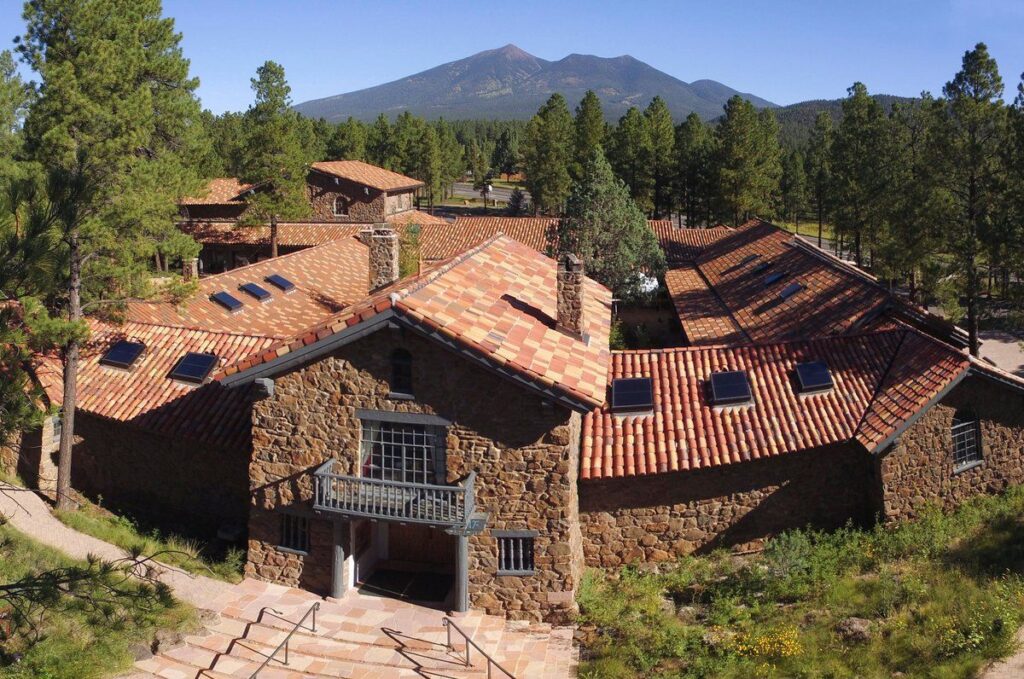
Topics commonly include geology, archaeology, anthropology, Indigenous cultures, natural history, and regional art. That context can add meaning to the rest of the drive, particularly if you want to understand how the Colorado Plateau developed and who has lived in the region.
The museum is especially useful for families, history enthusiasts, and travelers looking for an indoor activity during poor weather.
Allow at least an hour for a worthwhile visit. Exhibitions, admission details, and opening times can change, so confirm current information before planning the day around it.
If your Grand Canyon plans include a major hike or you are short on daylight, skip the museum. If you're mainly visiting viewpoints and have a more relaxed schedule, it fits the route without a major detour.
Stop 6: Grand Canyon Junction (Valle)
After Flagstaff, Grand Canyon Junction, near the community of Valle, provides a useful final break before the South Rim.
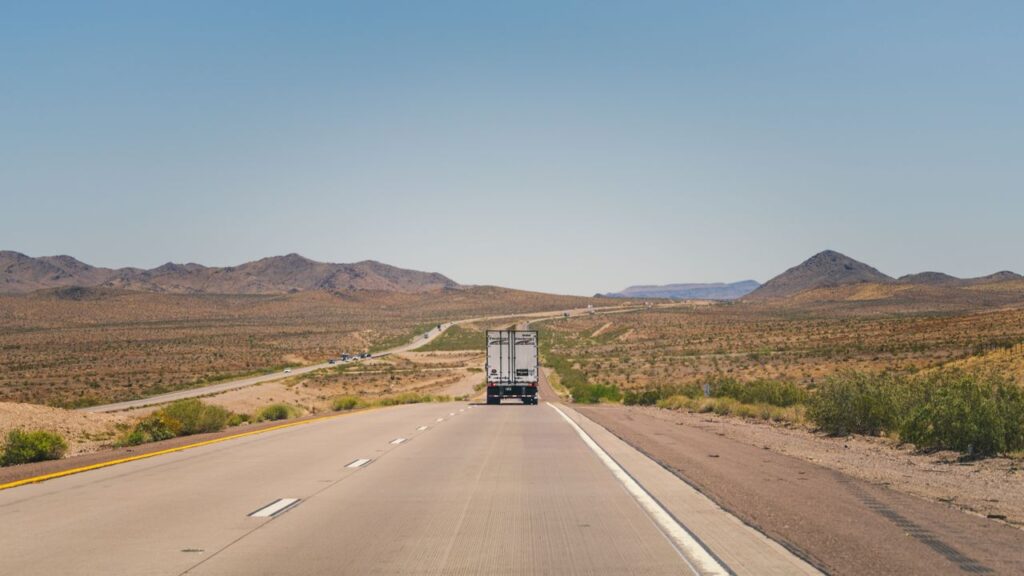
This is less a sightseeing stop than a practical one. Use it to check your fuel level, buy water or snacks, and take a restroom break before entering the busiest part of the trip.
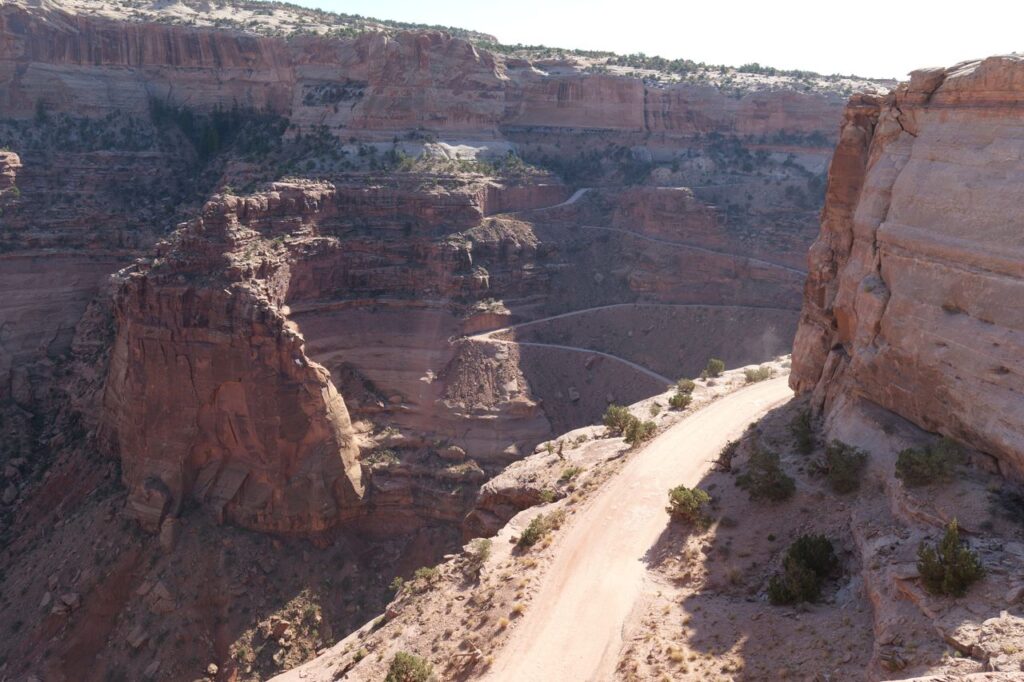
The surrounding landscape is very different from Sedona and Flagstaff. Open grassland, high-desert terrain, distant forest, and wide skies dominate the view.
Services and opening hours can vary, so do not depend on Valle as your only source of food, water, or fuel. Start the drive prepared and treat this as an extra opportunity to restock.
It's also a good place to check your schedule. If earlier stops took longer than expected, simplify the rest of the itinerary. Reaching the South Rim with time to walk and enjoy the views is more valuable than rushing between several additional stops.
Stop 7: Mather Point
After entering Grand Canyon National Park's South Rim, continue toward the Grand Canyon Visitor Center and Mather Point, one of the most accessible viewpoints for a first look at the canyon.
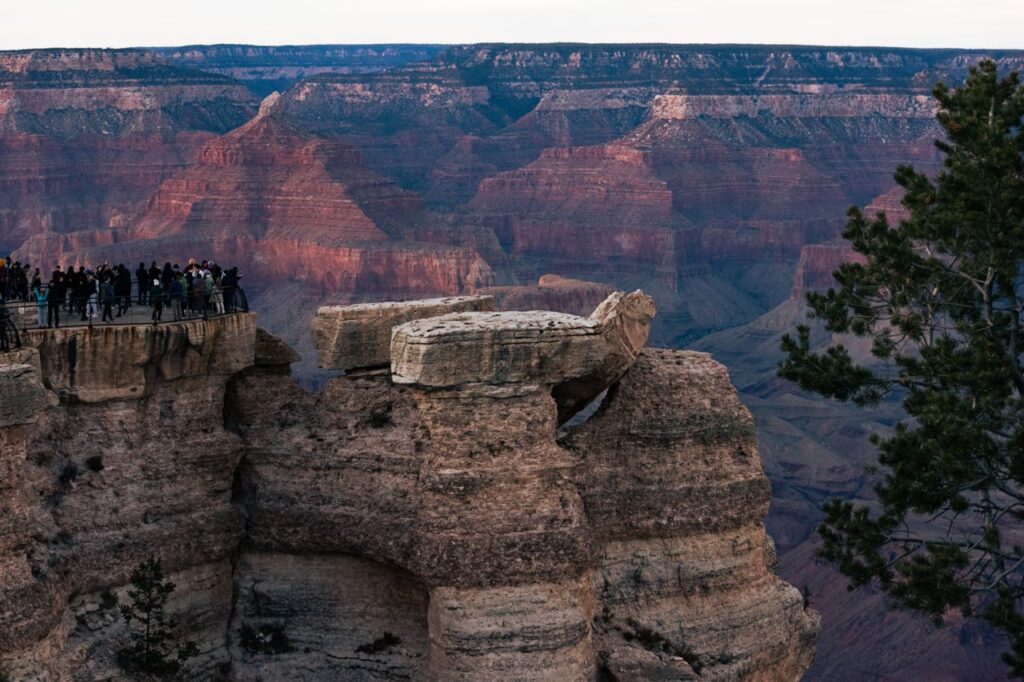
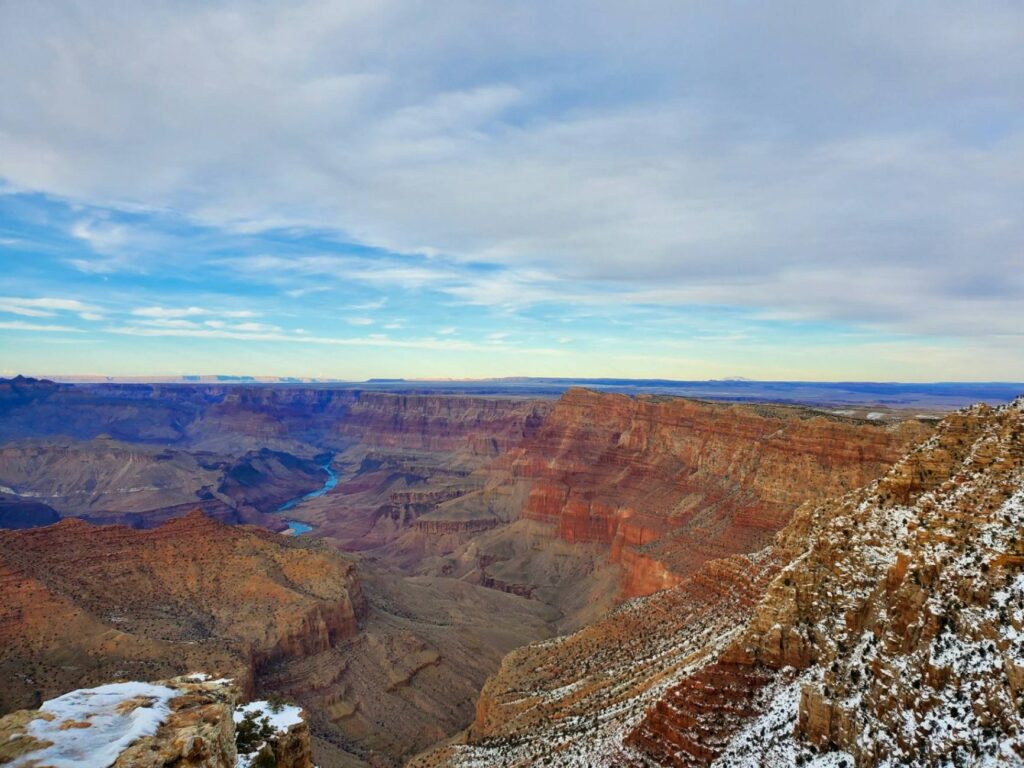
From the overlook, the landscape opens into layers of cliffs, mesas, side canyons, and distant formations. Changing light can shift the colors from red and cream to gray, violet, and orange.
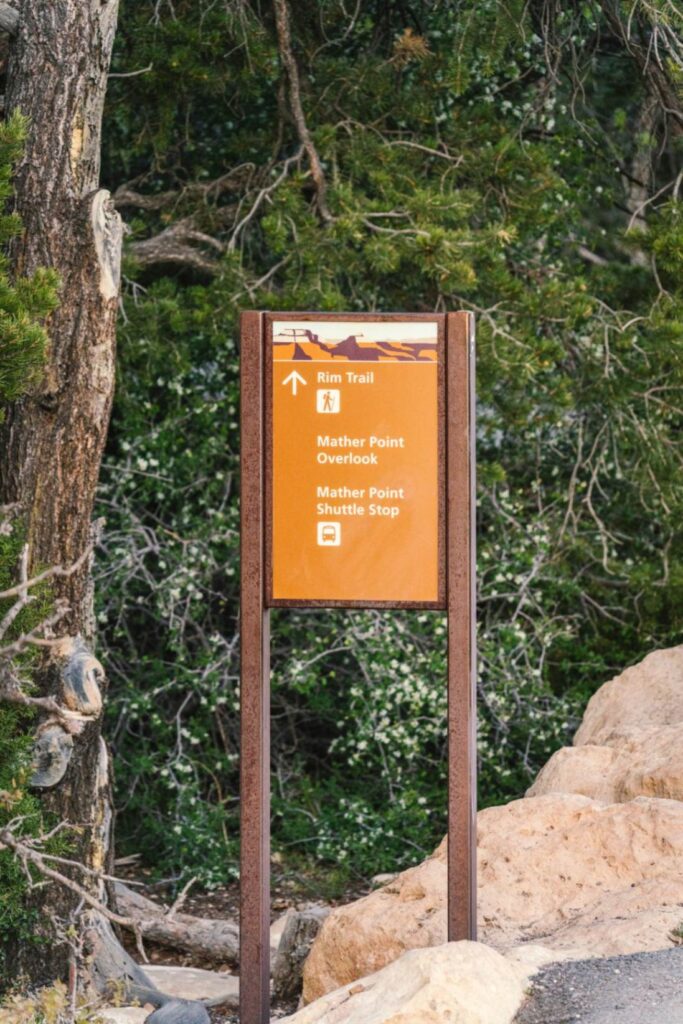
Mather Point is popular and can become crowded. Instead of staying only at the busiest railing areas, walk a short distance along the Rim Trail for additional perspectives. If nearby parking is full, follow current park transportation and parking guidance rather than repeatedly circling the lot.
Sunrise and late afternoon often bring dramatic light, but there is no need to avoid midday. The scale of the canyon remains impressive throughout the day.
Allow enough time to slow down once you arrive. Mather Point may be listed as the seventh stop, but for most travelers it is the destination the entire road trip has been building toward.
How Much Time Should You Allow for the Sedona to Grand Canyon Drive?
Driving directly from Sedona to Grand Canyon Village generally takes about two to two and a half hours in good conditions. Once you add scenic stops, meals, parking, and short walks, the journey becomes much longer.
Four to five hours is a practical target if you want a relaxed drive with two or three stops. A typical plan might include a short Oak Creek Canyon pause, 20 minutes at Oak Creek Vista, coffee or lunch in Flagstaff, and one final break before reaching the South Rim.
Trying to visit every stop properly requires much more time. Slide Rock can take several hours in summer, the Museum of Northern Arizona deserves at least an hour, and Flagstaff can easily expand into a half-day visit.
If you're returning to Sedona the same night, prioritize the Grand Canyon and choose only a few stops on the way north. You can save another stop for the return drive. Travelers staying overnight near the South Rim have more freedom to explore the route slowly.
If sunset is important, check the day's actual sunset time and arrive well beforehand. Parking, shuttle connections, walking, and finding a viewpoint all take time.
Best Time of Year to Drive From Sedona to the Grand Canyon
The Sedona to Grand Canyon road trip changes considerably with the season.
Spring and fall often bring comfortable sightseeing temperatures. Sedona may be warm while Flagstaff and the South Rim remain cool, and fall can add yellow and orange foliage to parts of Oak Creek Canyon.
Summer provides long daylight hours and makes Slide Rock more appealing, but it also brings heavier crowds. Parking may fill earlier at Sedona attractions and Grand Canyon viewpoints. Arizona's summer monsoon can also produce lightning, sudden rain, and rapidly changing conditions.
Winter offers dramatic scenery but requires more preparation. Sedona can remain relatively mild while Flagstaff and the South Rim receive snow and ice. Roads may become slick, visibility can drop, and winter storms can affect travel.
Spring can still bring cold weather at higher elevations, even when Sedona feels warm.
Whatever the season, pack for the highest and coldest part of the trip. Layers, water, sunscreen, and sun protection are useful year-round.
Essential Driving Tips for the Sedona to Grand Canyon Road Trip
The drive from Sedona to the Grand Canyon is manageable for most drivers in normal weather. AZ-89A through Oak Creek Canyon requires the most attention because of its curves, narrow sections, elevation changes, and switchbacks. Keep a safe following distance and use designated pullouts when you want to stop.
Weather is the biggest variable. Flagstaff and the South Rim can have snow or ice while Sedona remains clear. During winter, check official road and park conditions before departure and follow any traction or equipment requirements.
Start with enough fuel rather than testing the limits of the tank. Flagstaff is the easiest place to refuel and restock before the more rural part of the route.
Download offline maps, but keep your phone charged for navigation, weather updates, and park information. If you depend heavily on your phone during long drives, carrying a compact power bank gives you a backup when charging access is limited.
Keep drinking water in the vehicle throughout the year. Pack snacks, sunscreen, sunglasses, and layers. Winter trips may also require gloves, warmer outerwear, and additional emergency supplies depending on the forecast.
Watch for wildlife, especially around dawn, dusk, and forested stretches. Avoid beginning the return drive when you are already severely fatigued.
Most importantly, do not treat all seven stops as mandatory. Pick the ones that match your interests and preserve enough time for the Grand Canyon itself.
Conclusion: Turning the Drive Into Part of the Trip
The road from Sedona to Grand Canyon National Park passes through several distinct northern Arizona landscapes in just over 100 miles. Red sandstone gives way to Oak Creek Canyon, Flagstaff's ponderosa forests, the open Colorado Plateau, and finally the South Rim.
If time is limited, prioritize Oak Creek Vista, Flagstaff, and Mather Point. Add Slide Rock or the Museum of Northern Arizona when you have a more relaxed schedule.
The main mistake is planning so many stops that you arrive at the Grand Canyon with no time to enjoy it. Leave Sedona early, keep water and layers in the car, check road conditions, and treat the route as part of the experience rather than dead time between destinations.
FAQ
Can You Drive From Sedona to the Grand Canyon in One Day?
Yes. A Grand Canyon day trip from Sedona is realistic if you start early and keep roadside stops limited. The South Rim is roughly 110 to 120 miles from Sedona, and the one-way drive usually takes about two to two and a half hours in good conditions. For a one-day trip, choose one or two short stops such as Oak Creek Vista or Flagstaff, then spend most of your time at the canyon. Staying overnight is better if you want sunrise, sunset, hiking, or a slower visit.
What Is the Most Scenic Route From Sedona to the Grand Canyon?
The most scenic direct route is usually AZ-89A through Oak Creek Canyon to Flagstaff, followed by US-180 and AZ-64 toward the South Rim. This route combines Sedona’s red-rock scenery, Oak Creek Canyon, ponderosa forests near Flagstaff, and the open Colorado Plateau before reaching the Grand Canyon. A longer alternative goes through Cameron and the East Entrance near Desert View when the route is open, but it is better suited to a loop itinerary than a quick day trip.
Is the Drive From Sedona to the Grand Canyon Difficult?
The drive from Sedona to the Grand Canyon is manageable for most experienced drivers in normal weather. The most demanding section is AZ-89A through Oak Creek Canyon because of its curves, elevation changes, and switchbacks. Winter can make the route more challenging because Flagstaff and the South Rim may have snow, ice, poor visibility, or temporary restrictions even when Sedona is clear, so checking road and weather conditions before departure is important.
Should You Visit the Grand Canyon From Sedona or Stay Overnight?
A day trip from Sedona works well if you mainly want to see the South Rim, walk part of the Rim Trail, and visit several viewpoints. Staying overnight is the better option if you want to watch sunset or sunrise, hike below the rim, or avoid a long return drive after a full day of sightseeing. If the Grand Canyon is a major focus of your Arizona trip, spending at least one night near the South Rim usually gives you a less rushed experience.
What Should You Pack for the Sedona to Grand Canyon Drive?
Pack water, clothing layers, sun protection, comfortable shoes, snacks, offline maps, and a charged phone. Temperatures can differ significantly between Sedona, Flagstaff, and the South Rim because of the elevation change, so bring a jacket even when Sedona feels warm. In winter, add a warm coat, gloves, suitable footwear, and any equipment required by current road conditions; if you plan to stop at Slide Rock, bring water shoes, towels, and a change of clothing when swimming conditions are suitable.