Affiliate Note: Some links may be affiliate links. We may earn a small commission at no extra cost to you, and we only share recommendations we believe are useful.
Practical Travel Tips with Kids for Happier Family Adventures
Traveling with children is easier when your plans leave room for the realities of childhood: hunger, tiredness, boredom, changing moods, and unexpected delays. The goal is not a perfectly smooth vacation. It is enough structure and flexibility to keep small problems from taking over the day.
These seven practical travel tips with kids focus on sleep, packing, food, transportation, flexible itineraries, entertainment, and emotional overload. They can help whether you are flying with school-age children, taking a road trip with toddlers, or exploring a new city as a family.
Table of Contents
Tip 1: Plan Around Kids’ Natural Rhythms
Children do not leave their normal patterns behind when vacation begins. Hunger, naps, sleep, energy, and attention still influence how much they can comfortably handle.
Think about your child's typical day. When are they happiest and most energetic? When do they normally need food, rest, or quiet time? Younger children may still need naps, while older kids can become equally exhausted after hours of museums, walking, or sightseeing.
Schedule demanding activities during your family's strongest part of the day. If your children are energetic in the morning, make that the time for the major attraction. Leave afternoons for parks, swimming, neighborhood walks, or downtime. Families that function better later can reverse the pattern.
Vacation routines can be flexible. Bedtimes may shift and meals may happen at unusual hours. The important thing is not abandoning every familiar rhythm at once.
Think of your child's energy like a battery. Excitement can temporarily hide tiredness, but it cannot remove it. Build in opportunities to recharge before exhaustion starts controlling the day.
Choose Travel Times That Protect Sleep and Energy
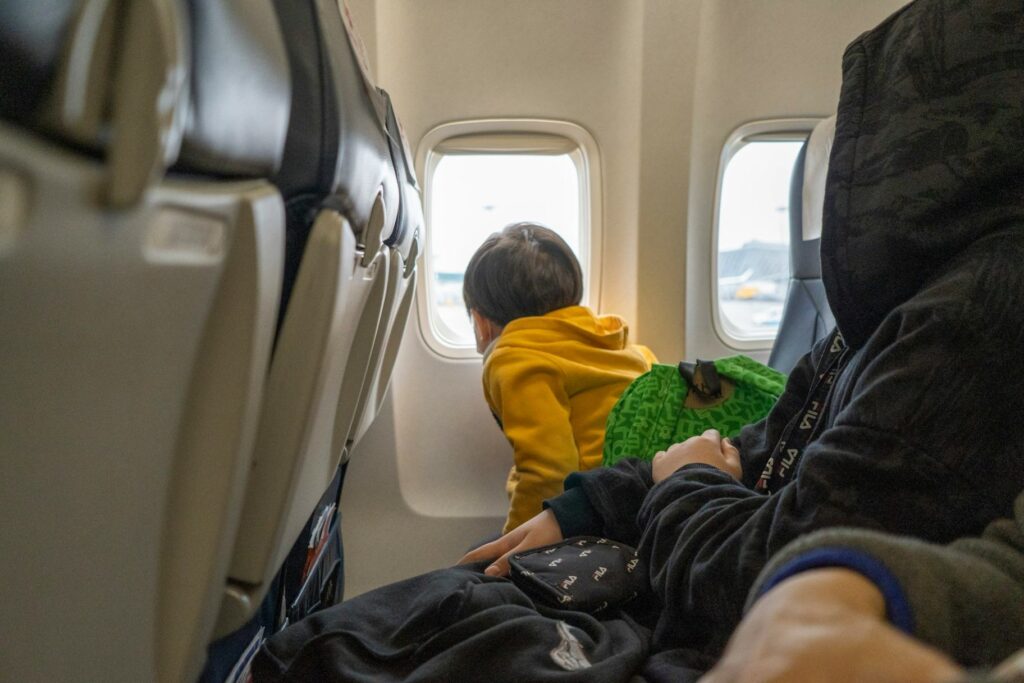
A cheap flight is not always the best-value flight for a family. A departure before sunrise may require waking children several hours earlier than usual and arriving with an entire day still ahead.
When choosing flights, compare both price and timing. You can compare flight options with Aviasales, but also calculate when you actually need to leave home, how long check-in and security may take, whether your children will sleep in transit, and when you are likely to reach your accommodation.
Road trips provide more flexibility. Some families drive during nap time; others leave after breakfast and stop around lunch for food and movement. Avoid treating overnight driving as an easy shortcut if it compromises the driver's rest.
Long international journeys will disrupt routines regardless of planning. Focus on hydration, food, comfort, daylight after arrival, and realistic expectations for the first day.
When flying with kids, treating arrival day as a transition day often works well. Check in, eat something familiar, explore nearby, and give everyone time to settle instead of immediately starting a full sightseeing schedule.
Tip 2: Pack Smarter, Not Heavier
Packing for children easily turns into preparing for every possible scenario. The result is often too many bags that need to be carried, organized, opened, repacked, and transported throughout the trip.
Instead, practice smart family packing. Bring clothing that layers easily, mixes well, and can handle ordinary messes. If laundry will be available, washing a few items halfway through the trip is often easier than carrying twice as many clothes.
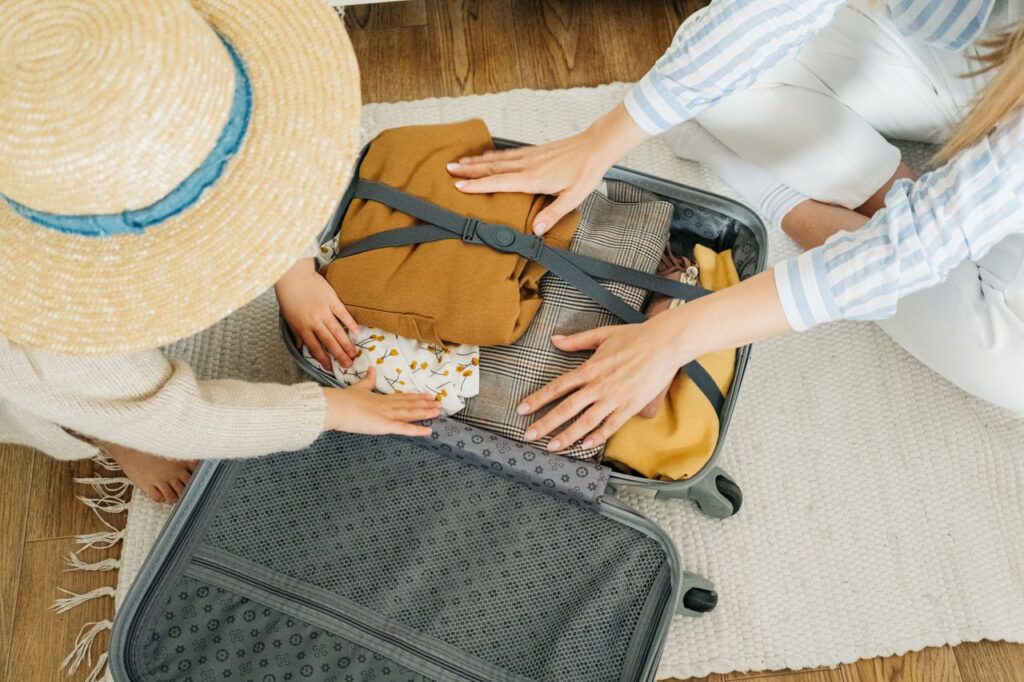
Let older children participate within clear limits. “Choose three shirts and one toy” works better than simply telling them to pack whatever they want.
Evaluate bulky baby and toddler gear carefully. A stroller, portable crib, booster seat, carrier, and car seat may all be useful, but that does not mean every item belongs on every trip. Check what your accommodation, rental company, or destination can provide.
A simple rule helps: everything you bring should earn its space. A favorite comfort toy may help a child sleep. Five backup toys probably will not offer the same value.
When traveling with children, mobility matters. Less unnecessary luggage means more attention for the people traveling with you.
Build a One-Bag Essentials System
Keep one essentials bag accessible during transit. It should contain what your family may realistically need over the next several hours rather than everything packed for the vacation.
Depending on your children's ages, include travel documents, necessary medication, snacks, water, wipes or tissues, spare clothing for younger children, charging equipment, basic entertainment, and one or two comfort items. Babies will require diapers and feeding supplies, while older children may want headphones or a book.
Use small pouches or compartments so important items are easy to find. Medication, electronics, and spare clothing can each have a designated place.
Keep essential medication out of checked luggage and travel documents under adult control. If losing a particular comfort object would create a major bedtime problem, consider traveling with a backup.
Older children can carry lightweight personal backpacks with entertainment or snacks, but remember that adults often end up carrying those bags later. Keep them genuinely light.
A simple one-bag system removes repeated searching and keeps small transit problems from becoming larger ones.
Tip 3: Make Food and Hydration Predictable
Young children often show hunger through irritability long before they clearly announce that they need food. Predictable meals, snacks, and water are therefore among the simplest tools for stress-free travel with kids.
Your vacation does not need to follow your home meal schedule exactly, but do not make food an afterthought. Before spending several hours at an attraction, know roughly where lunch can happen. Before a long train journey, consider whether suitable food will be available onboard.
Hydration needs attention too. Flights, warm weather, long walks, and unfamiliar routines make it easy for children to forget to drink. Carry refillable bottles where practical and offer water regularly.
Local food can be a wonderful part of travel, but every meal does not have to challenge a child's comfort zone. Pair unfamiliar dishes with something recognizable when possible. Children are already adapting to new places, beds, schedules, sounds, and people.
Treat meals as part of the day rather than inconvenient interruptions. A relaxed breakfast, picnic, or early dinner can become a travel memory while also giving children the physical energy to enjoy what comes next.
Create a Snack Strategy That Prevents Meltdowns
A well-timed snack can prevent a surprisingly large number of family travel conflicts.
Pack foods your children reliably eat along with options that provide more staying power than candy alone. Depending on allergies, dietary needs, and travel rules, possibilities include crackers, dried fruit, sandwiches, snack bars, cereal, cheese, or other portable favorites.
For international flights and border crossings, remember that fresh produce and some food products may be restricted. Consume or dispose of anything prohibited before customs when necessary.
Packaging matters. Individual portions or small reusable containers are easier to manage than large family-size bags. Avoid snacks that melt immediately, create extreme mess, or require complicated preparation.
Timing is equally important. Offer food before a long queue, before boarding, during a road-trip break, or when a meal will be delayed rather than waiting until children are already exhausted and hungry.
Keep one dependable snack in reserve for a delayed flight, traffic jam, closed restaurant, or unexpected schedule change. Among the simplest tips for traveling with toddlers and young kids, predictable snacks and water are also among the most effective.
Tip 4: Turn Transit Into a Routine
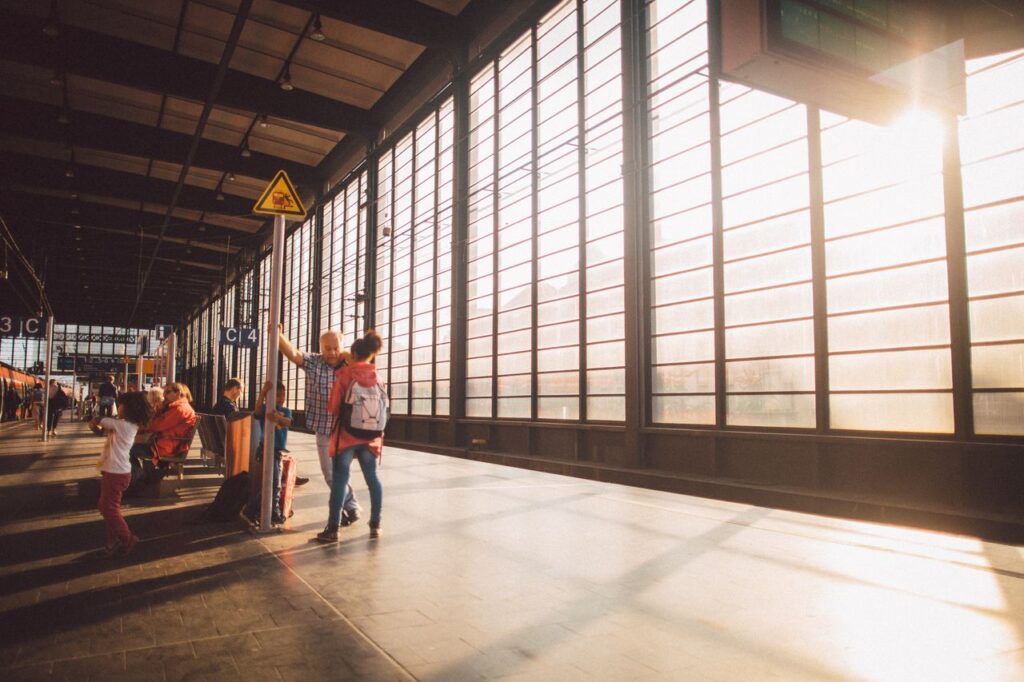
Airports, highways, stations, security lines, baggage claims, shuttle buses, and rental counters ask children to switch repeatedly between walking, waiting, sitting, and hurrying.
Instead of treating every transit period as unpredictable chaos, create a simple sequence children can recognize. At an airport, that might mean bathroom, security, refill water bottles, find the gate, then snack.
Keep instructions short in busy places. “Stay beside me while we go through security” is easier to follow than six instructions at once. Older children can help carry a light backpack, check a gate number, or count suitcases.
Build movement into waiting whenever possible. Let children walk before boarding after a long car ride, or use road-trip breaks for stretching and movement.
Establish safety expectations before entering crowded areas. Younger children may need to hold an adult's hand or stay beside the stroller. Older children should know what to do if separated and how to identify an appropriate staff member or information point.
When traveling with kids, familiar patterns make unfamiliar spaces easier to manage.
Use Simple Airport, Road Trip, and Train Rituals
Travel rituals do not need to be elaborate. Their value comes from repetition.
For air travel, use the bathroom before security, refill bottles afterward, find the gate, have a snack, and consider another bathroom stop before boarding.
On road trips, establish a realistic rhythm for breaks. Combine bathroom stops with water, movement, and a quick check that everyone has what they need.
At train stations, keep everyone together until you are safely on the platform or seated. If seats or carriage numbers are assigned, find the correct boarding area before the train arrives rather than trying to organize children and luggage while the doors are open.
Repeated routines reduce parental mental load too. Instead of constantly remembering whether bottles need filling or someone needs the bathroom, the family follows a sequence that gradually becomes automatic.
Tip 5: Keep the Itinerary Flexible
A family-friendly itinerary needs breathing room. Reservations and advance planning can be useful, but your schedule should not become a contract that must be completed regardless of how everyone is functioning.
Children often experience destinations differently from adults. You may be focused on a famous museum while your child becomes fascinated by the fountain outside it. Those unplanned moments can become some of the trip's strongest memories.
Build optional activities into your plans. Keep a few nearby parks, playgrounds, cafés, beaches, or indoor alternatives in mind. Continue exploring when everyone has energy and change course when fatigue appears.
Avoid the trap of continuing simply because you paid for something. A nonrefundable ticket is already a sunk cost; you do not also need to sacrifice the rest of the afternoon if a child is exhausted.
For genuinely stress-free family trips, the quality of the experience matters more than the number of attractions completed.
Plan One Anchor Activity Per Day
Choosing one anchor activity per day is an effective way to simplify family travel.
The anchor is the experience you most want to protect: a museum, theme park, wildlife tour, archaeological site, boat trip, or another major attraction. Everything else remains flexible around it.
Schedule that activity during the time your children are most likely to enjoy it. For many families, this means morning. Afterward, lunch can be relaxed and the rest of the day optional.
If the main event happens in the evening, keep the morning easier and leave room for downtime beforehand.
One anchor does not mean the family can only do one thing. It simply changes secondary activities from obligations into bonuses.
You can also give children small choices afterward: playground or ice cream, market or park, neighborhood walk or hotel swim. Limited choices create a useful sense of ownership without handing over the entire itinerary.
One memorable activity enjoyed by people who still have energy is often better than five rushed attractions.
Tip 6: Bring Entertainment Without Overpacking
Delays, traffic, long restaurant waits, and transportation create periods when a compact activity can make family travel much easier.
The best travel activities for kids are small, easy to use, and suitable for more than one situation. A coloring set, reusable sticker book, puzzle book, deck of cards, audiobook, downloaded show, or favorite story can provide plenty of variety without turning your luggage into a playroom.
A little novelty can help. Save one inexpensive activity for a long flight or difficult stretch of a road trip rather than giving children everything at once.
Consider noise and loose pieces. Loud electronic toys are poorly suited to crowded trains or airplanes, while tiny pieces have a habit of disappearing under seats.
Match entertainment to your child's age and temperament. Some children can draw for an hour; others need frequent changes.
Do not feel responsible for filling every minute. Looking out the window, talking about the scenery, or experiencing a little boredom are also normal parts of travel.
Balance Screens, Games, and Quiet Activities
Screens can be extremely useful during long journeys. A downloaded movie may be exactly what a family needs on an eight-hour flight.
The practical approach is balance. Prepare screen entertainment and screen-free travel activities so you have alternatives when batteries run low, internet access disappears, or devices need to be put away.
Download entertainment before departure instead of relying on airport or airplane Wi-Fi. Bring comfortable child-friendly headphones and test them before traveling.
For non-screen options, consider books, drawing materials, magnetic games, cards, activity pads, word games, or simple storytelling. Conversation games require no luggage at all.
Quieter activities can also help children transition toward sleep. A story or calm audiobook may work better than switching directly from an exciting movie to bedtime.
Older children can manage more of their own entertainment if you give them a reasonable storage limit. Variety matters more than quantity.
Tip 7: Manage Emotions Before They Become Meltdowns
Travel exposes children to unfamiliar beds, crowds, food, bathrooms, languages, schedules, security checks, long waits, and constant transitions. What looks like misbehavior may sometimes be overload.
Boundaries still matter, especially for safety, but first consider what is driving the behavior. Is the child hungry, tired, thirsty, overstimulated, anxious, or frustrated by having little control over the day?

Watch for early warning signs such as increased whining, arguing over small issues, restlessness, clinging, unusual silliness, or suddenly refusing routine requests.
Responding early is usually easier than recovering from a full meltdown. Sit somewhere quieter, offer water or food, allow a short break, use headphones, skip an optional attraction, or return to the accommodation earlier.
Parents need margin too. Calm responses become much harder when adults are also hungry, dehydrated, exhausted, and rushing to stay on schedule.
One of the most useful travel tips with kids is remembering that behavior often communicates a need the child cannot clearly explain.
Use Connection, Choices, and Calm Transitions
Travel requires children to follow countless adult instructions. Small choices can return some sense of independence.
Offer two options you can accept: blue shirt or green shirt, playground or hotel swim, carrying the backpack or placing it under the stroller.
Acknowledge feelings without removing necessary boundaries. A child can be disappointed about leaving the pool while still needing to leave for dinner.
Transitions often cause conflict, so give advance notice whenever possible. Tell children when an activity has fifteen minutes left and again when there are five minutes remaining. Explain what happens next.
With younger children, turning movement into a simple game can help: count stairs, look for three red objects, race to put on shoes, or appoint them the map helper.
Calm does not mean permissive. It means maintaining the same boundary without adding unnecessary emotional intensity.
How to Make Family Travel Easier at Hotels and Rentals
Accommodation should help the family recover from the day.
When traveling with babies or toddlers, quickly inspect the room from their perspective. Look for accessible balconies, cords, stairs, sharp corners, fragile items, cleaning products, or doors that may require extra attention.

Give belongings simple locations as soon as you arrive. Keep shoes near the door, dirty clothes in one bag, snacks together, chargers in a designated place, and important documents somewhere children cannot move them.
Create a quiet area if possible. In a small hotel room, this might simply be a corner with a book and headphones where a child can withdraw briefly from sightseeing stimulation.
Location also matters when booking accommodation. A cheaper property far from the places you plan to visit can cost the family hours of commuting and valuable energy. Staying near public transport, food, parks, or major attractions can make daily logistics much easier.
The room does not need to entertain everyone. Its main job is to support sleep, organization, meals, and recovery.
Create a Familiar Mini-Routine Away From Home
A few familiar routines can help children settle into an unfamiliar room.
Bedtime is often the most valuable one to preserve. If home normally means pajamas, story, and lights out, keep that basic sequence even when bedtime happens later. Bring a familiar book or comfort object if it matters to your child.
Create a simple morning pattern too. Give everyone time to wake up, eat, use the bathroom, and hear a basic outline of the day before rushing toward the first attraction.
After sightseeing, use a short reset: shoes off, water bottles refilled, dirty clothes put away, and a few quiet minutes.
Do not worry when routines occasionally collapse. Children may fall asleep in a stroller, dinner may happen late, and everyone may occasionally be too tired for the normal bedtime sequence.
Kids do not need every part of vacation to be predictable. A few familiar rituals provide enough stability to make everything new easier to enjoy.
Conclusion: Better Family Trips Come From Better Systems
A stress-free family trip is not one where nothing goes wrong. Delays, tired children, changed plans, missing socks, and difficult moments are normal.
What matters is preventing small problems from multiplying. Plan around children's energy, pack intentionally, keep food and water predictable, use familiar transit routines, leave space in the itinerary, bring compact entertainment, and respond to overload before it becomes a meltdown. These systems reflect the article's original focus on reducing friction rather than trying to create a flawless itinerary.
Your children may not remember how many attractions you completed. They are more likely to remember laughing on a train, finding a playground beside a famous landmark, swimming at the hotel, or staying out late for ice cream.
Traveling with kids is not about completing a destination. It is about experiencing it together with enough structure to protect everyone's energy and enough flexibility for the unexpected moments that become family stories.
FAQs
1. What is the best age to start traveling with kids?
There is no universally perfect age. Babies may be portable, toddlers need more movement and supervision, and school-age children can participate more actively in sightseeing. The best time is usually when the adults feel prepared for the practical demands of that stage.
2. How can I make flying with children less stressful?
Choose sensible travel times when possible, leave enough margin at the airport, keep essentials accessible, bring snacks and entertainment, and let children move before boarding. Explain the airport process beforehand when they are old enough to understand it.
3. How many activities should families schedule each day?
For many families, one major anchor activity is a good starting point. Keep additional plans flexible according to naps, weather, transportation, energy, and mood.
4. What should parents carry while sightseeing with kids?
Useful basics include water, a snack, wipes or tissues, necessary medication, weather protection, and one lightweight entertainment option. Younger children may also need diapers or spare clothing.
5. How do you handle a child's meltdown while traveling?
Check the basics first: hunger, thirst, sleep, overstimulation, fear, and frustration. Move somewhere calmer, reduce demands temporarily, maintain safety boundaries, and acknowledge what the child is feeling. Sometimes changing the plan and giving everyone time to reset is the most useful response.