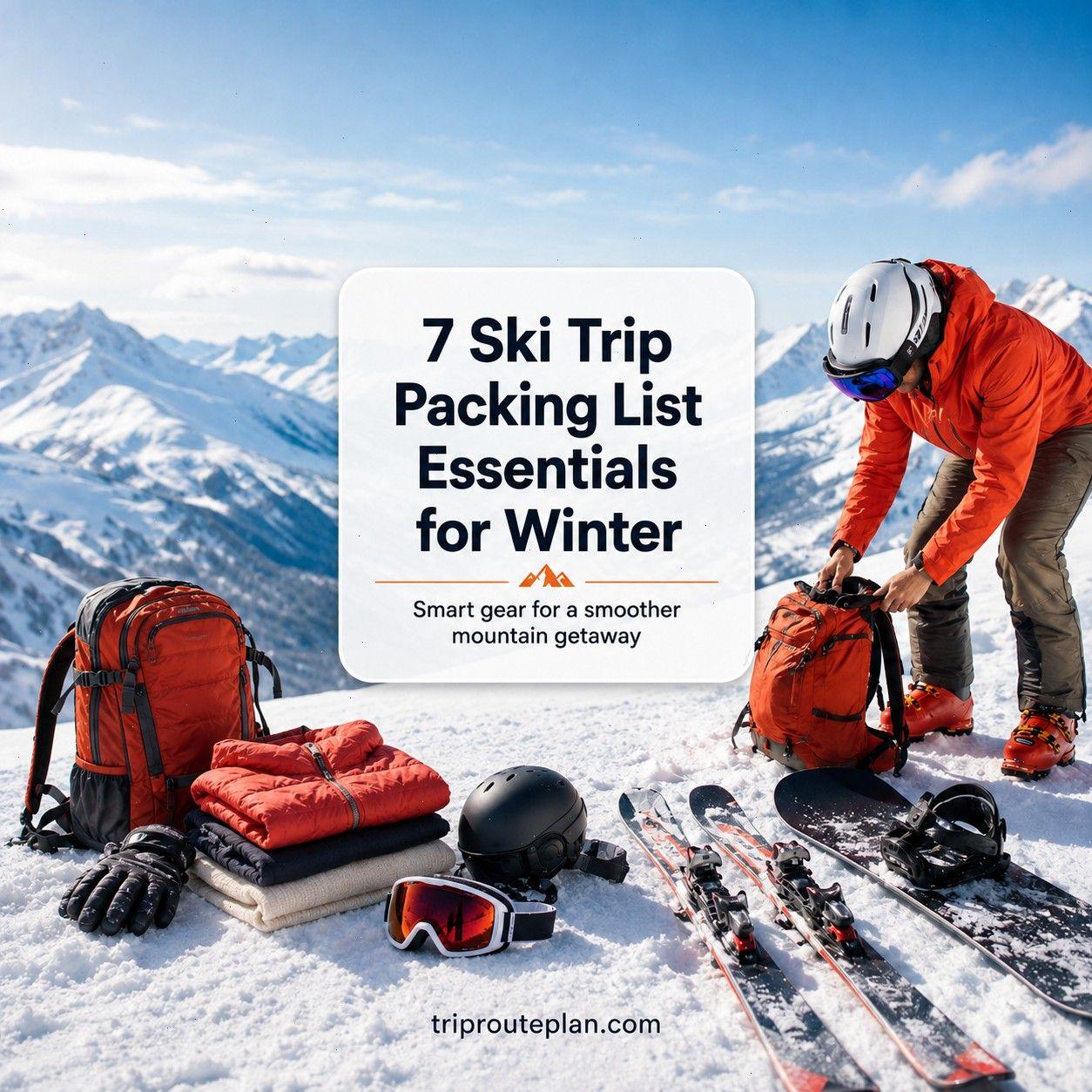
Affiliate Note: Some links may be affiliate links. We may earn a small commission at no extra cost to you, and we only share recommendations we believe are useful.
Crafting Your Ideal Ski Trip Packing List for Comfort
A good ski trip packing list has to cover more than cold weather. Skiing means hours outdoors in wind, snow, strong sun, changing temperatures, and periods of intense activity followed by cold chairlift rides. The right combination of layers and gear keeps you comfortable without filling your suitcase with bulky winter clothes.
The most useful approach is to pack a small, adaptable system: moisture-wicking base layers, adjustable insulation, waterproof outerwear, reliable accessories, protective gear, and practical clothing for evenings. You also need to decide which ski equipment is worth transporting and what makes more sense to rent.
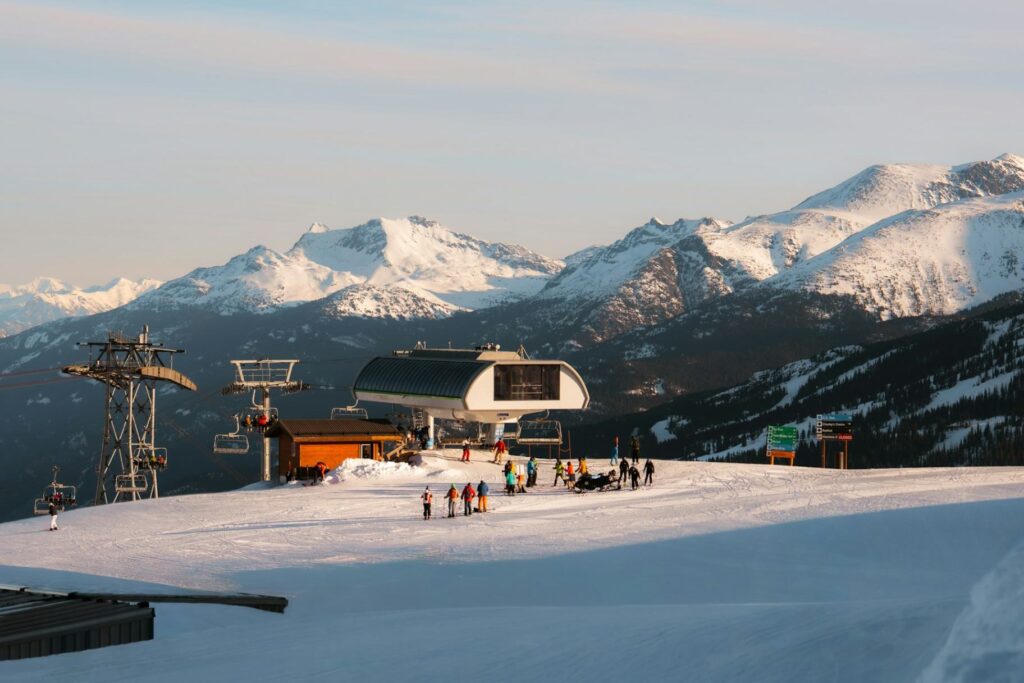
These seven ski trip essentials cover the items most travelers need for a comfortable winter getaway.
Table of Contents
1. Pack a Reliable Ski Jacket and Waterproof Outerwear
A ski jacket and ski pants form your main barrier against snow, wind, and moisture. An ordinary winter coat may be warm enough for walking around town but often lacks the weather protection, ventilation, and freedom of movement needed for skiing.
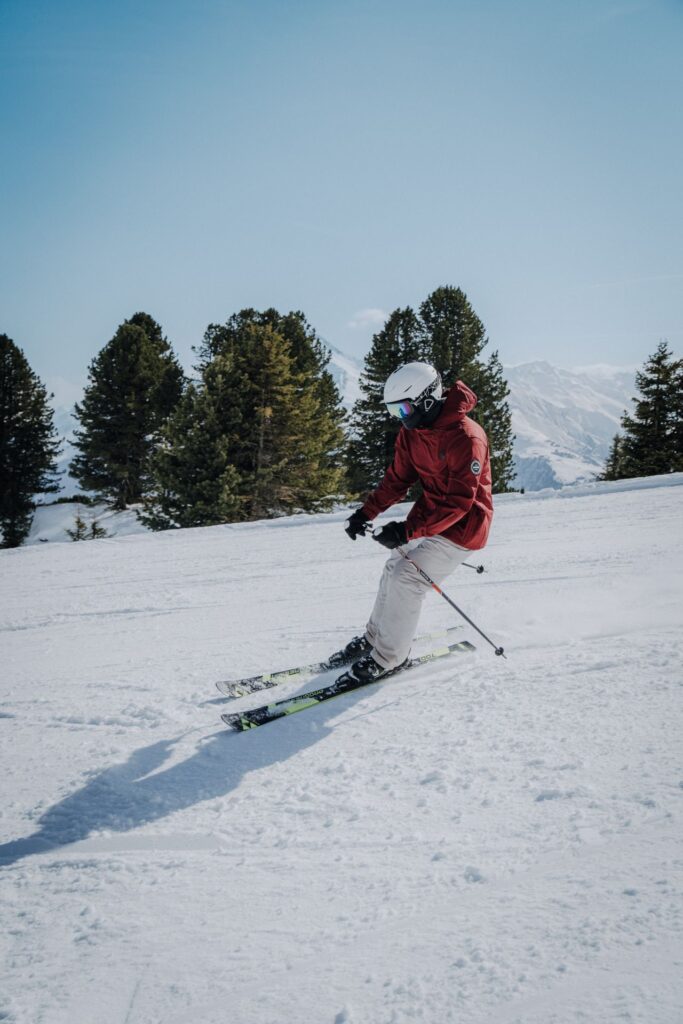
Your jacket should block wind and moisture while allowing excess heat to escape. Skiing generates plenty of body heat, and clothing that traps perspiration can leave inner layers damp. Once you stop moving, particularly on a lift, that moisture can make you feel much colder.
Ski pants need similar protection. Jeans, sweatpants, and standard leggings can absorb snow and remain wet, especially when you sit on snowy surfaces or fall. Beginners may notice this even more because learning usually involves frequent contact with the snow.
Remember that waterproofing and insulation are separate features. Insulated ski jackets provide built-in warmth, while shell jackets are lighter and rely on layers underneath. A shell gives you more flexibility in variable weather; an insulated jacket can be simpler for consistently cold destinations.
What to Look for in a Ski Jacket and Ski Pants
You do not need expedition-grade outerwear for every resort, but a few features are worth checking.
Prioritize appropriate water resistance or waterproofing for the conditions you expect. Wet snowfall and frequent contact with snow make stronger protection more valuable. Taped or sealed seams can reduce moisture entering through stitched areas.
Ventilation is also useful. Underarm vents on jackets and thigh vents on pants let heat escape without requiring you to remove a layer. This can make a substantial difference during strenuous skiing or warmer afternoons.
Helpful jacket features include:
- a secure lift-pass pocket
- internal pockets for a phone or wallet
- adjustable cuffs
- a powder skirt
- a hood that fits over or around your helmet
- ventilation zips
For ski pants, look for snow gaiters around the ankles, reinforced cuffs, and enough room to bend comfortably while wearing a thermal layer underneath.
Try your complete ski outfit before traveling. Put on the base layer, mid-layer, jacket, and pants together, then bend, squat, and raise your arms. Clothing that already feels restrictive at home is unlikely to improve on the mountain.
2. Bring Moisture-Wicking Base Layers for Warmth
Base layers sit directly against your skin and help move perspiration away from the body. That moisture-management role is one of the most important parts of staying comfortable in cold weather.
Cotton is generally a poor choice for active skiing because it absorbs moisture and dries slowly. Once damp, it can make you feel cold when your activity level drops.
A standard ski base-layer system includes a fitted long-sleeved thermal top and thermal leggings. They should sit close to the body without restricting movement or bunching underneath your outerwear.
Base layers come in different weights, but thicker does not automatically mean better. Your choice should depend on temperature, activity level, and the insulation you plan to wear over them. A midweight set is versatile for many recreational ski trips.
You usually do not need one thermal set for every ski day. For a three- or four-day trip, two sets allow you to alternate them while one airs out or dries. Longer trips become easier to pack for if your accommodation has laundry facilities.
Apply the same principle to underwear and sports bras where relevant. Fast-drying materials generally perform better than absorbent fabrics during long active days.
Merino Wool vs. Synthetic Base Layers
Both merino wool and synthetic fabrics work well for skiing, but they have different strengths.
Merino wool regulates temperature well and tends to resist odors, making it useful when you want to re-wear a layer between washes. Modern merino is much softer than traditional wool, although some people with sensitive skin still prefer synthetics.
Synthetic base layers, often made from polyester blends, usually dry quickly, withstand frequent washing, and cost less. They can be particularly useful for people who perspire heavily. Some synthetic fabrics retain odors more readily than merino, although this varies by garment.
Blended materials combine wool with synthetic fibers to improve durability and drying performance while retaining some of merino's comfort and odor resistance.
Choose based on fit, drying speed, comfort, and how often you expect to wash your clothing rather than thickness or branding alone.
3. Add Insulating Mid-Layers You Can Adjust
The layer between your thermals and ski jacket provides much of your insulation. A good mid-layer lets you adapt to temperature changes without carrying several bulky sweaters.
Fleece is a dependable choice because it is breathable, relatively light, quick to dry, and easy to layer. A quarter-zip gives you extra ventilation, while a full-zip fleece is easier to remove.
A lightweight down or synthetic insulated jacket can provide more warmth on colder days. Down offers excellent warmth for its weight and packs down small, while synthetic insulation generally copes better with moisture.
Some skiers prefer an insulated vest, which keeps the torso warm without adding as much bulk around the arms.
A practical combination for variable weather is one fleece plus one lightweight insulated layer. That gives you several options:
- fleece only
- insulated layer only
- both together
- neither on unusually warm days
Avoid stacking so many layers that they become compressed beneath your jacket. Insulation needs some space to trap warm air, and excessive bulk can restrict movement.
Try the full system at home. If you cannot rotate your shoulders, bend comfortably, or move your arms freely, simplify the combination before packing it.
4. Pack Ski Socks, Gloves, and Cold-Weather Accessories
Small accessories can have an outsized effect on comfort. Cold fingers, wet feet, or an exposed neck can end a ski day early even when your jacket and pants perform well.
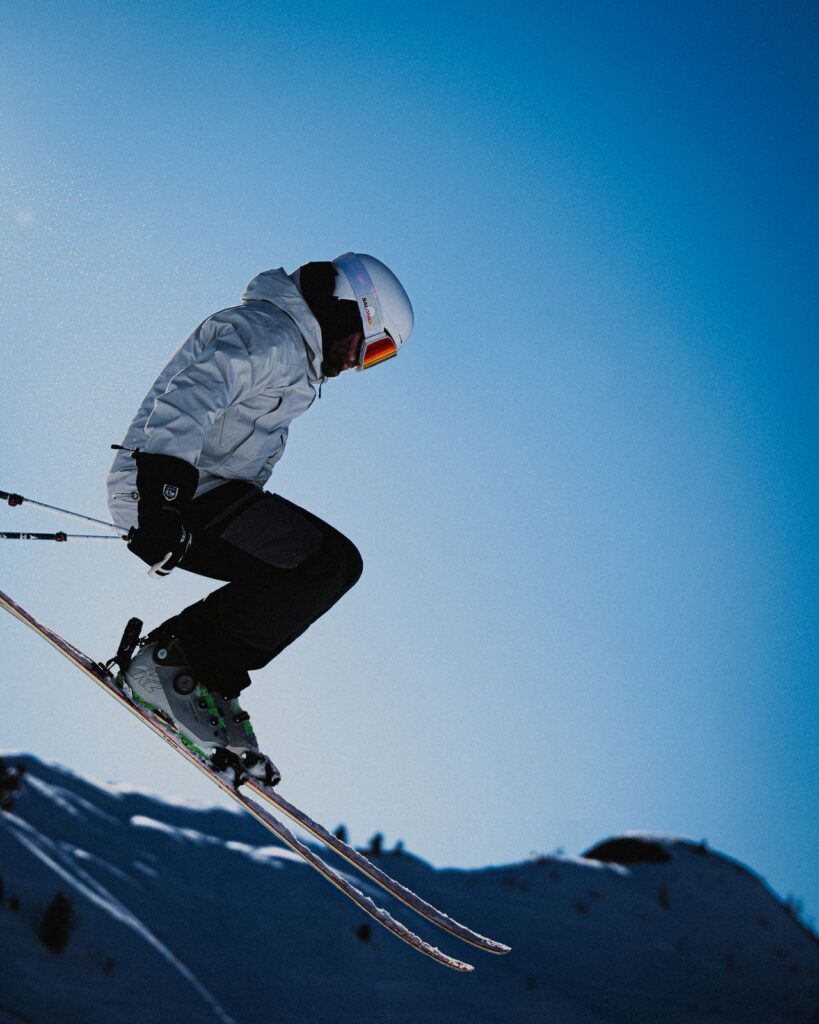
Start with proper ski socks. Purpose-built socks are designed to fit inside close ski boots and provide cushioning without excessive bulk. Thicker socks are not necessarily warmer. If they make the boot too tight, restricted circulation can actually leave your feet colder.
Merino wool and technical synthetic blends are common choices because they handle moisture better than cotton.
For your hands, choose insulated gloves or mittens with weather-resistant shells. Gloves provide better dexterity for zips, buckles, and poles. Mittens keep your fingers together and can feel warmer in very cold weather. Lobster-style gloves provide a compromise between the two.
A neck gaiter is also worth packing. It covers exposed skin without the loose fabric of a scarf and can often be pulled over your lower face during windy lift rides. In particularly cold conditions, a balaclava or thin helmet-compatible liner may provide extra protection.
Bring backups for small items that are difficult to use when wet. An extra pair of ski socks takes little room, while spare gloves or liners can be useful if your primary pair becomes soaked.
Small Accessories That Make a Big Difference on the Mountain
A few compact items can solve common problems without adding much weight:
- SPF lip balm
- pocket sunscreen
- tissues
- a goggle or glasses cloth
- hand warmers
- required medication
- an emergency contact card
- a small power bank
Cold weather can reduce phone battery performance, so keep your phone in an internal pocket when possible.
If you rely on resort apps, maps, messaging, or digital booking confirmations while traveling abroad, arranging mobile data before departure can also be useful. Setting up an Airalo eSIM before the trip can give compatible phones mobile data without requiring you to find a physical SIM after arrival. Check device compatibility and destination coverage before buying a plan.
Do not carry unnecessary electronics on the slopes. Pack only what you expect to use, secure valuables in zipped pockets, and follow the resort's safety guidance.
5. Include Essential Ski and Snowboard Gear
For skiers, the main equipment includes skis, bindings, boots, and poles. Snowboarders need a board, bindings, and boots. Whether you should transport your own equipment or rent it depends on experience, travel logistics, costs, and how particular you are about fit.
Boots are usually the most personal piece of equipment. Skiers with properly fitted boots often prefer to travel with them even when renting skis at the destination. A familiar boot fit is difficult to reproduce consistently with rentals.
If you bring skis or a snowboard, use an appropriate equipment bag. Padded bags provide better protection during flights, while simpler covers may be sufficient for road trips. Some travelers place clothing inside equipment bags, but airline size and weight restrictions still apply.
Before leaving, check small but important components such as custom footbeds, boot straps, and equipment-specific accessories.
Beginners generally do not need to buy a complete ski setup before their first trip. Resorts and nearby rental shops commonly provide packages with skis, boots, and poles or snowboard equipment. Booking ahead can reduce the amount of time spent arranging gear on your first morning.
Your equipment plan should make the journey easier, not turn every airport or transfer into a struggle with oversized luggage.
Should You Pack or Rent Your Ski Equipment?
Renting is usually easier for beginners, occasional skiers, and anyone traveling through several airports or train stations. You avoid transporting an oversized ski or snowboard bag and can choose equipment suited to local conditions and your ability level.
Bringing your own gear offers familiarity. You already know how the boots fit and how the skis or board respond. Frequent skiers may also find ownership more economical over several trips.
A hybrid approach works well for many experienced travelers: bring your own boots and helmet, then rent skis and poles. Boots are highly personal, while skis are comparatively easy to replace with rentals and cumbersome to transport.
Your local transportation matters too. A standard compact vehicle may not have enough space for multiple passengers, luggage, and ski bags. If your trip requires a rental car, compare vehicle size, winter-equipment options, and luggage capacity rather than focusing only on the base rate. Searching rental car options on Economybookings.com can help you compare vehicle categories, but confirm winter tires, chains, ski racks, and local requirements directly with the rental provider before driving in mountain conditions.
Before deciding whether to bring or rent ski gear, compare:
- equipment rental prices
- airline sports-baggage fees
- oversized-luggage restrictions
- airport and hotel transfers
- storage at your accommodation
- vehicle capacity if driving
- distance to the rental shop
The cheapest-looking option is not always the most convenient once transportation is included.
6. Protect Yourself With a Helmet, Goggles, and Sun Protection
A helmet, goggles, and sun protection belong on every serious ski vacation packing list.
A ski or snowboard helmet should fit securely without painful pressure points. If you own one, inspect it according to the manufacturer's recommendations before traveling and replace it when its condition or impact history requires replacement.
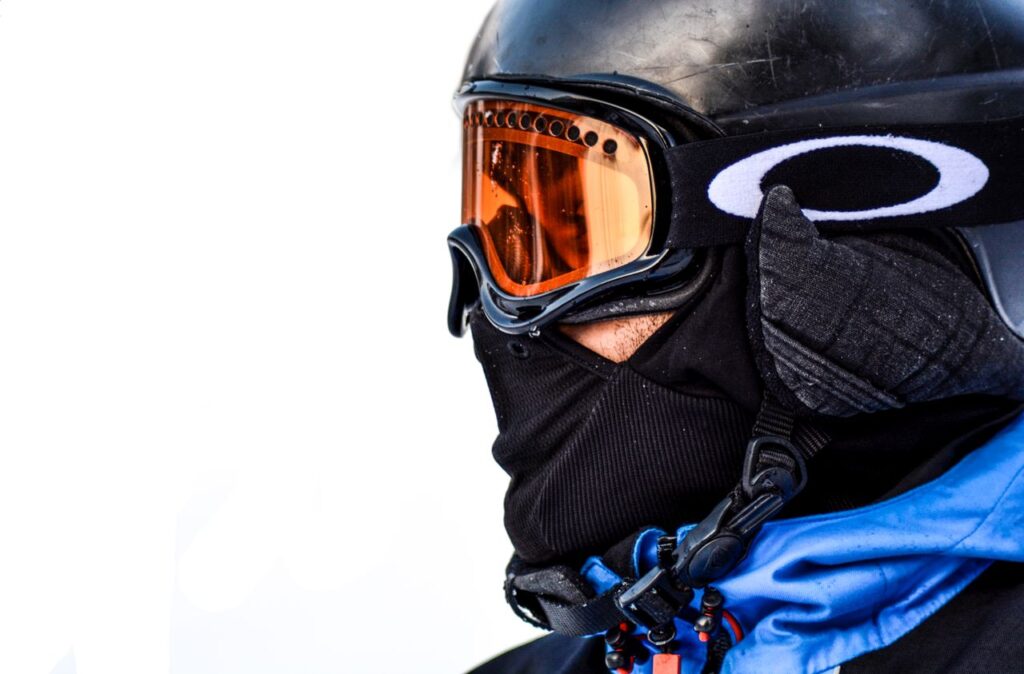
Goggles protect your eyes from wind, snow, glare, and ultraviolet exposure while improving visibility across changing terrain. Lens choice matters. Darker lenses tend to work better in bright sun, while lighter or contrast-enhancing lenses may improve visibility in cloud or flat light. Interchangeable-lens goggles can cover a wider range of conditions.
Try your goggles with your helmet before the trip. Poor compatibility can create pressure points, gaps around the forehead, or fogging problems.
Sun protection is easy to underestimate in winter. Snow reflects sunlight, and exposure can be intense at elevation even when the air feels cold. Apply broad-spectrum sunscreen to exposed skin and reapply it during long days outdoors. SPF lip balm helps protect lips from wind and sun.
Pack sunglasses for walking around the resort or having lunch outdoors after you remove your goggles.
Protective equipment reduces risk but does not make reckless skiing safe. Follow local rules, check weather and piste conditions, stay within your ability, and take instruction when needed.
7. Pack Comfortable Après-Ski Clothing and Winter Footwear
Once the ski boots come off, you need a small set of comfortable clothes for evenings, meals, and walking around the resort.
Avoid packing a separate outfit for every night unless your itinerary requires it. One or two pairs of casual trousers or leggings combined with several mix-and-match tops are usually enough for a short ski holiday.
Look for items that can perform more than one role. A fleece may work as both a ski mid-layer and a casual evening jacket. A merino top can work during travel, around the resort, or as additional insulation.
Footwear is more important than variety. Ski boots are unsuitable for walking around town, particularly on ice. Bring one pair of water-resistant winter boots with reliable traction. Good grip is often more useful than fashionable soles on snowy or icy paths.
Lightweight indoor shoes can be worthwhile if your accommodation has a gym or if you simply want something comfortable after skiing.
Check your hotel or chalet facilities before packing. If there is a pool, spa, sauna, or hot tub, add a swimsuit. Lightweight sandals may also be useful around changing areas.
A small après-ski capsule wardrobe saves space for the technical clothing and equipment that matter more during the day.
Conclusion: Pack Smarter for Your Ski Trip
A useful ski trip packing list is built around function rather than quantity. Start with moisture-wicking thermals, adjustable insulation, waterproof outerwear, ski socks, gloves, a helmet, and goggles. Then decide which equipment makes sense to carry and what you would rather rent.
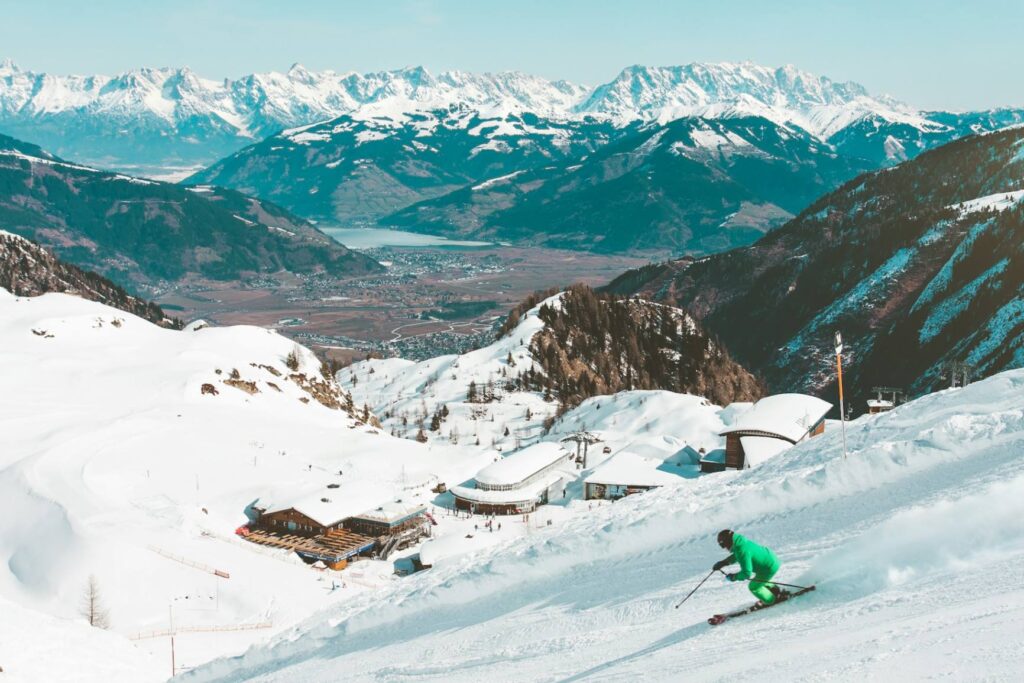
For a final check, imagine one full day from breakfast to your return after dinner. Make sure you have something to keep your skin dry, protect you from snow, warm your hands and feet, shield your eyes and head, and keep you comfortable once the ski boots come off.
Pack versatile pieces, check the weather shortly before departure, verify airline or rental rules where relevant, and leave unnecessary duplicates at home. A lighter, better-organized bag makes both the journey and the days on the mountain easier.
FAQs About Weekend Trip Packing
1. What should I pack for a two-day weekend trip?
For a two-day weekend trip, pack two versatile outfits, underwear and socks, sleepwear, comfortable shoes, a light layer, basic toiletries, medications, your phone and charger, identification, payment methods, and any destination-specific essentials such as sunscreen, swimwear, or rain protection. Choose clothing that can be mixed and matched, use travel-size toiletries, and avoid packing duplicate items you are unlikely to use.
2. How many outfits do I need for a three-day getaway?
For a three-day getaway, three tops and two bottoms are usually enough, especially if the pieces can be mixed and matched. Add underwear and socks for each day, sleepwear, one versatile jacket or sweater, and no more than one or two pairs of shoes unless your itinerary includes a specific activity or formal event.
3. Is a backpack enough for a weekend trip?
Yes, a medium-size backpack is usually enough for a two- or three-day weekend trip if you pack light and choose versatile clothing. A travel backpack can comfortably hold a few outfits, toiletries, electronics, medication, and a lightweight jacket, although travelers carrying bulky winter clothing, formalwear, or specialized equipment may prefer a small carry-on suitcase.
4. What are the most commonly forgotten items when packing for a weekend trip?
The most commonly forgotten weekend travel items include phone chargers, toothbrushes, medications, identification, pajamas, socks, glasses or contact-lens supplies, sunscreen, and reservation details. To avoid leaving essentials behind, keep a short last-minute checklist for items you still use on the morning of departure and store frequently needed travel accessories in the same pouch between trips.
5. How can I avoid overpacking for a short weekend trip?
To avoid overpacking, plan your clothing around your actual itinerary, choose mix-and-match pieces, limit shoes, use travel-size toiletries, and pack everything into a small bag. Before leaving, remove duplicate items and anything included only for an unlikely “just in case” situation; if an item cannot be matched with several outfits or tied to a specific activity, you probably do not need it.