Affiliate Note: Some links may be affiliate links. We may earn a small commission at no extra cost to you, and we only share recommendations we believe are useful.
Essential International Travel Tips for First-Time Travelers
Your first international trip comes with more moving parts than a weekend getaway at home, but it does not need to feel overwhelming. The key is handling the details that are expensive, difficult, or stressful to fix after departure while leaving enough flexibility to enjoy the destination.
These international travel tips for first-time travelers cover the practical essentials beginners often overlook: passports and visas, budgeting, insurance, packing, mobile data, money, airports, safety, cultural etiquette, and itinerary planning. Because entry requirements, airline rules, health regulations, and visa policies can change, always confirm destination-specific information through official government, embassy, airline, airport, or transportation sources before traveling.
You do not need to become an experienced traveler before your first flight abroad. A little preparation, a backup plan for the essentials, and a willingness to adapt will take you a long way.
Table of Contents
Why Smart Preparation Makes Your First International Trip Better
Good preparation is less about predicting every possible problem and more about giving yourself options. If your documents are organized, you know how you will access money, your phone can connect abroad, and your first night's accommodation is confirmed, unexpected changes become inconveniences rather than emergencies.
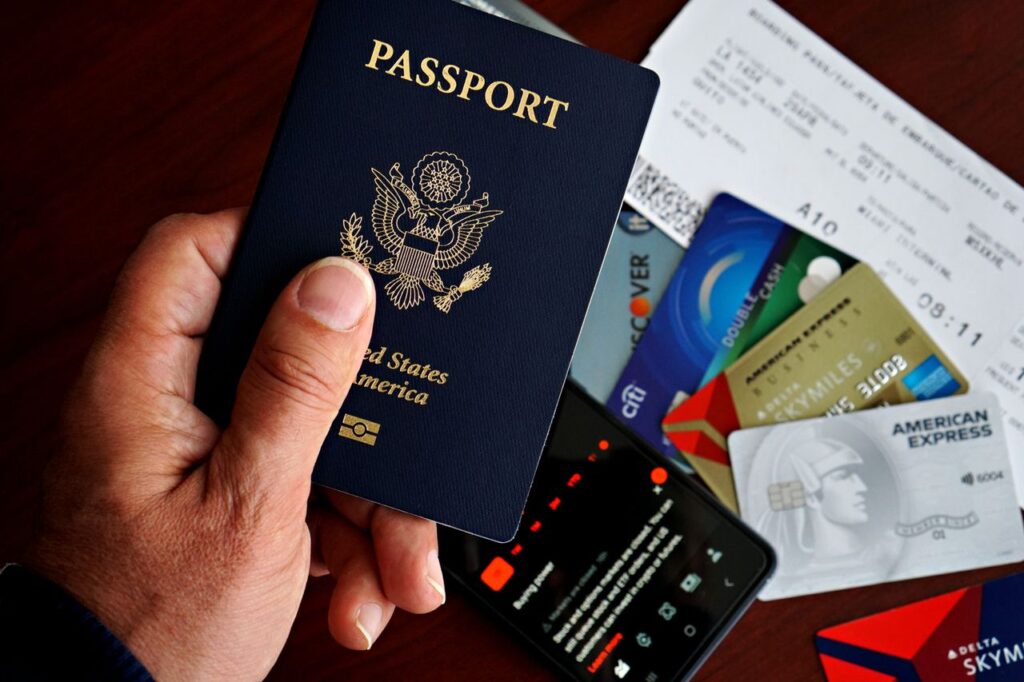
First-time travelers often spend more time researching restaurants, attractions, and viewpoints than thinking about airport transfers, entry requirements, payment methods, or luggage rules. Yet a missing document, blocked card, or impossible airport connection can create far more stress than missing a museum.
Prepare carefully for anything that would be expensive, unsafe, or difficult to fix after arrival. Stay flexible about how you spend an afternoon. That balance gives you security without turning the trip into a rigid schedule.
1. Check Your Passport, Visa, and Entry Requirements Early
Your passport and entry documents should be among the first things you check, ideally before making expensive nonrefundable reservations.
Start with your passport's expiration date and physical condition. A passport is not automatically acceptable simply because it remains technically valid during your trip. Some destinations have additional validity, blank-page, or document-condition requirements. Airlines may also verify your eligibility to enter the destination before allowing you to board.

Check the official immigration authority, embassy, or consulate for your destination rather than relying solely on old travel articles or another traveler's experience.
Visa requirements can depend on your nationality, destination, purpose of travel, and length of stay. Depending on the country, you might need a traditional visa, electronic authorization, registration, proof of onward travel, accommodation information, or other supporting documentation.
Create secure backups of essential travel information, including your passport identification page, required entry authorizations, accommodation details, travel insurance information, and major transportation reservations. Keep backups separate from the originals and avoid storing sensitive documents somewhere that would be easily accessible if your phone or email account were compromised.
Finally, check official requirements again shortly before departure. Entry and transit procedures can change.
Double-Check Passport Validity and Destination-Specific Rules
Pay special attention to connections through other countries. The rules for a transit stop may depend on whether you remain airside, change terminals, collect checked luggage, or formally enter the country.
Make sure the names on airline reservations and other important bookings are consistent with your travel documents. If you recently changed your legal name or notice a ticket error, contact the airline or booking provider rather than hoping the discrepancy will be ignored.
Protect your passport during the trip as well. Avoid carrying it loosely or repeatedly taking it out in public when you do not need it, while still following any local identification requirements.
Passport and visa preparation may be the least exciting part of planning an international vacation, but it is also one of the hardest problems to solve at an airport.
2. Build a Realistic Travel Budget Before You Leave
International trips often cost more than beginners expect because small expenses accumulate quickly.
Start with major fixed costs:
- transportation to and from the destination
- accommodation
- necessary intercity transportation
- travel insurance
- important advance-booked attractions
Then estimate everyday spending such as meals, public transportation, entrance fees, coffee, tips, mobile data, and entertainment.

Leave room for expenses you did not plan. A delayed flight might lead to an extra meal, public transportation may stop running before you arrive, or delayed luggage may require replacement toiletries and clothing. A financial buffer can turn these situations from serious problems into manageable inconveniences.
Separate necessary spending from discretionary spending when helpful. Hotels and transportation may already be covered, while a daily allowance can control spending on restaurants, souvenirs, drinks, and optional activities.
Research local pricing practices too. Taxes, service charges, tipping customs, and card fees vary by destination. The number displayed on a menu or reservation page may not always represent the final amount you will pay.
Most importantly, budget for the trip you actually want. Choosing the cheapest option every time can create unnecessary inconvenience. Sometimes paying more for a hotel near a station, a direct train, or convenient airport transportation is worthwhile because it buys time and simplicity.
3. Protect Your Trip With the Right Travel Insurance
Travel insurance is designed to reduce the financial consequences of certain unexpected events. For an international traveler, that can include situations that are far more expensive than a missed dinner reservation.

Policies differ considerably. Depending on the plan, coverage may include emergency medical expenses, trip cancellation, interruption, baggage problems, travel delays, or evacuation assistance. Limits, exclusions, deductibles, eligibility requirements, and documentation rules are just as important as the headline coverage amount.
Medical coverage deserves particular attention because your regular health insurance may work differently outside your home country. Before departure, understand what protection you already have and whether additional coverage is appropriate for your destination and activities.
If you need a separate international policy, you can review travel coverage from EKTA and compare its actual terms, limits, exclusions, and eligibility with your needs before purchasing.
Travelers with existing medical conditions, expensive equipment, complicated itineraries, or planned adventure activities should read exclusions particularly carefully.
Timing may also matter. Some protections depend on when a policy is purchased relative to the original booking or trip payment.
Keep your policy number, assistance contact details, and claim instructions accessible while traveling. If something happens, preserve receipts, medical documents, written delay confirmations, and other evidence that could be required for a claim.
Travel insurance cannot prevent disruptions, but suitable coverage can make certain emergencies much easier to manage financially.
4. Pack Light and Pack for the Trip You Are Actually Taking
First-time international travelers often pack for every imaginable situation rather than for the trip they actually planned. The result is usually a heavy suitcase filled with items that never leave the hotel room.
Start with your itinerary. Consider:
- weather and climate
- cultural expectations
- planned activities
- laundry access
- how often you will change hotels
- baggage limits
- how much walking or public transportation is involved
A traveler staying ten days in one resort has different needs from someone changing cities every two nights and carrying luggage through train stations.

Choose clothes that work together so fewer pieces can create multiple outfits. Layers usually provide more flexibility than several bulky outfits for different temperatures. Limit shoes that serve nearly identical purposes, especially because footwear takes significant luggage space.
Your carry-on deserves extra attention. Keep items that would be difficult to replace quickly, including your passport, required documents, essential medication, valuables, phone, chargers, and a basic change of clothes, subject to airline and security rules.
Checked luggage can be delayed, so do not place everything you need for your first day in the aircraft hold.
Check baggage allowances directly with the airline operating each flight. Size, weight, item limits, and fees can differ by carrier, fare type, and route.
Finally, leave some space in your luggage. You may buy something during the trip, and repeatedly forcing an overfilled suitcase closed quickly becomes frustrating.
Packing light is not about extreme minimalism. It is about removing unnecessary friction from your trip.
5. Plan How Your Phone and Internet Will Work Abroad
Your smartphone may contain your boarding passes, hotel address, maps, tickets, banking apps, translation tools, transportation apps, reservations, and emergency contacts. Losing connectivity can therefore disrupt much more than social media.

Check your mobile provider's international roaming options before departure. Depending on your plan, roaming may already be included, available as an add-on, or expensive enough that an alternative makes more sense.
Depending on your device and destination, you might use a local physical SIM or an eSIM. If you want mobile data working shortly after landing, setting up an Airalo eSIM before departure can be more convenient than searching for a physical SIM after arrival.
Whatever connection method you choose, do not rely entirely on mobile data.
Before leaving home:
- download offline maps
- save your hotel address
- store important booking references
- keep transportation information available offline
- save emergency contacts
- take screenshots of essential tickets where appropriate
Public Wi-Fi also requires caution. Avoid assuming every network with a familiar name is legitimate, and be careful with sensitive transactions on networks you do not trust. Keep devices updated and protect important accounts with strong authentication.
Check electricity standards at your destination too. You may need a plug adapter, and some equipment may have voltage limitations. A portable battery can be useful during long travel days, provided it complies with current airline rules.
A prepared phone functions as a navigation system, translator, ticket wallet, communication tool, and emergency resource all at once.
6. Create a Smart Strategy for Money, Cards, and Cash
Using money abroad can be confusing because you are dealing with unfamiliar currencies, ATM screens, exchange rates, card fees, and payment customs.
Avoid depending on a single payment method. A primary card plus a backup option stored separately gives you protection if your main card is lost, blocked, damaged, or rejected.
Check the fees attached to your cards before traveling, including foreign transaction fees and international ATM withdrawal charges. Policies vary by bank and card provider.
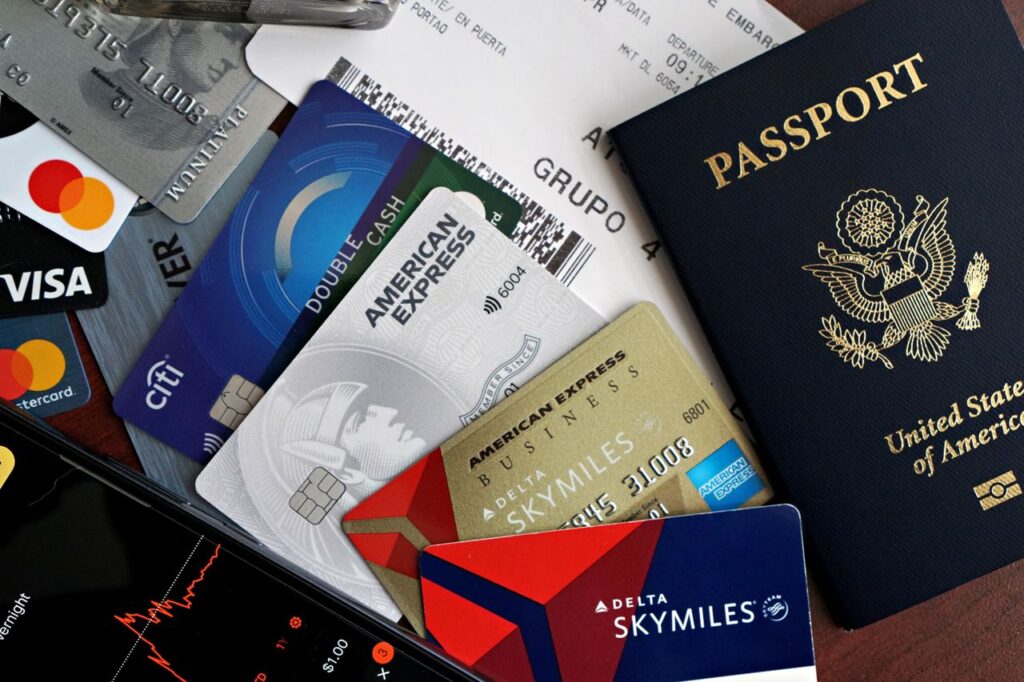
Cash remains useful even in destinations where cards are widely accepted. Markets, small businesses, tips, transportation, or temporary payment-system failures may require local currency. You normally do not need enough cash for the entire trip; carry an amount suitable for realistic short-term needs.
When an ATM or payment terminal offers to charge you in your home currency instead of the local currency, read the exchange terms carefully. Seeing a familiar currency may feel convenient, but that does not automatically mean the conversion is favorable.
Keep backup money separate from your everyday wallet. If all of your cards and cash disappear together, carrying alternatives has not helped.
It is also useful to learn approximately what common amounts mean in your destination's currency. You do not need perfect mental conversions, but you should know whether a quoted price is roughly equivalent to a coffee, dinner, or several days of accommodation.
The goal is redundancy: more than one way to pay, a reasonable amount of cash, an understanding of major fees, and enough awareness to avoid rushed decisions.
7. Learn How Airports, Immigration, and Customs Work
International airports can feel intimidating because several unfamiliar processes may happen during a single journey.
Depending on your route, you may encounter:
- airline check-in
- baggage drop
- security screening
- departure passport control
- boarding
- arrival immigration
- baggage claim
- customs
The exact order varies between airports and countries.
Before leaving, confirm your airport, terminal when available, and your airline's recommended arrival time. International departures may require additional documentation checks, so first-time travelers often benefit from allowing more time than they would for a routine domestic flight.
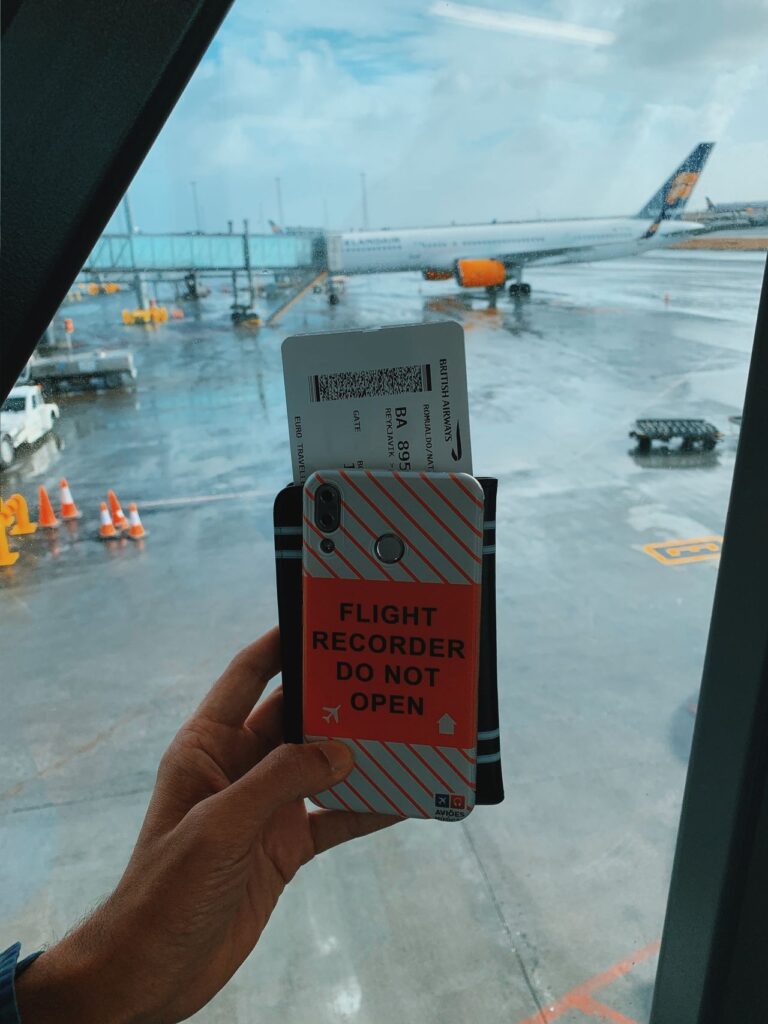
At check-in, the airline may inspect passports and entry documents. Security screening determines what can enter the secure area and aircraft. Requirements involving liquids, electronics, and prohibited items can vary, so check the relevant airport or security authority's current guidance.
On arrival, immigration or passport-control officers may ask simple questions about the reason for your visit, where you are staying, or how long you plan to remain. Answer clearly and honestly and keep important accommodation or onward-travel information accessible.
Customs concerns the goods you bring into the country. Rules may apply to food, agricultural products, medicines, alcohol, tobacco, currency, commercial goods, and other items. If you are unsure whether something needs to be declared, ask an official rather than trying to conceal it.
Connections can be more complicated. Depending on the airport and itinerary, you may need to change terminals, clear security again, collect and recheck luggage, or pass through immigration.
Study your connection beforehand, then follow airport signs and ask staff when necessary. Airports are designed to be navigated by people who have never been there before.
8. Take Health, Personal Safety, and Emergency Planning Seriously
Basic safety planning should make you more confident, not more afraid to travel.
Before departure, review official destination-specific health guidance and consider your own medical needs. Requirements or recommendations may relate to medications, vaccinations, allergies, accessibility, or particular activities.
Rules for taking medicines across borders can differ, especially for prescription or controlled substances. Verify the requirements for your destination rather than assuming that keeping medicine in a prescription bottle is always sufficient.
Bring necessary medication in an appropriate and accessible way, ideally with enough for the planned trip plus a reasonable margin where possible. Keep important medical information available if another person might need it during an emergency.
Personal safety often comes down to ordinary habits:
- stay aware of your surroundings
- secure phones and wallets in crowded places
- avoid displaying large amounts of cash
- be cautious when strangers create artificial urgency
- use transportation appropriate for the destination
- avoid allowing alcohol to compromise your judgment
Share basic itinerary information with someone you trust. Know how to contact local emergency services and, when necessary, your country's embassy or consular assistance.
Keep important contact information somewhere outside your phone as well. A dead, damaged, or stolen phone should not leave you without your hotel address or emergency numbers.
If a situation feels wrong, leave. Enter a public place, contact accommodation staff, use official transportation, or seek help from authorities.
Simple precautions give you more freedom to enjoy the destination without constantly worrying about what might happen.
9. Respect Local Culture, Customs, and Everyday Etiquette
A destination is not simply an attraction for visitors. It is where people work, raise families, practice religion, commute, shop, and live ordinary lives.

Before traveling, learn the basic customs that affect daily interactions. Depending on the destination, this may include:
- greetings
- appropriate clothing
- religious-site etiquette
- dining customs
- tipping
- public behavior
- photography
- personal space
You do not need to understand every cultural detail before arrival. A small amount of research combined with respectful observation is usually enough to prevent common mistakes.
Learn a few useful words when appropriate. Expressions such as “hello,” “please,” “thank you,” and “excuse me” can improve an interaction even when your pronunciation is imperfect.
Be thoughtful about photography. Markets, religious ceremonies, neighborhoods, and traditionally dressed people are not automatically props for social media. Follow posted restrictions and ask permission when appropriate.
Avoid constantly judging differences against the way things are done at home. “Different” does not automatically mean “wrong.” One of the benefits of international travel is discovering how many versions of normal exist.
Pay attention to local expectations about noise and personal space as well. A conversation that feels ordinary at home may be disruptive on a quiet train or inside a sacred building.
Cultural respect does not require ignoring unsafe behavior or abandoning your own boundaries. It means approaching differences with curiosity and humility.
10. Plan Your Itinerary Without Scheduling Every Minute
A first international trip can create pressure to see everything. That often produces an itinerary so crowded that a small delay disrupts the entire day.
Instead, build your schedule around a few priorities.
Identify the experiences that would genuinely disappoint you to miss. Reserve attractions or transportation that require advance booking, then leave space around those fixed points rather than filling every available hour.
Travel time often takes longer than a map suggests. Checking out of a hotel, carrying luggage, finding a platform, waiting for transportation, navigating unfamiliar streets, and storing bags all consume time.
Changing cities is especially demanding. A two-hour train ride rarely occupies only two hours of your day once packing, transfers, station navigation, and hotel check-in are included.
Allow recovery time after a long international flight. Jet lag, poor sleep, unfamiliar meals, weather changes, and information overload can make the first day more tiring than expected.
Leave unscheduled time for discoveries you could not plan in advance. A neighborhood café, market, park, bookstore, conversation, or unexpected local event can easily become one of the most memorable parts of the trip.
Grouping attractions geographically can also reduce wasted travel time. Exploring one area well is often more enjoyable than crossing the city repeatedly to complete a checklist.
Your itinerary should give the trip structure, not control every minute of it.
A First-Time International Travel Checklist Before Departure
The final days before departure can become busy, so use a simple checklist to make sure the essentials are covered.
Travel Documents
- Confirm your passport is valid for your destination.
- Check visa, authorization, entry, and transit requirements.
- Make sure reservation names match your documents.
- Save secure copies of important documentation.
- Recheck official entry information shortly before departure.
Flights and Transportation
- Confirm flight dates and departure airport.
- Check terminal information when available.
- Review baggage limits.
- Plan transportation to the airport.
- Know how you will reach your first accommodation after arrival.
- Review any connection procedures you may need to follow.
Money
- Prepare a primary and backup payment method.
- Check card and ATM fees.
- Carry an appropriate amount of local currency if useful.
- Store backup money separately.
- Save bank contact information.
Phone and Electronics
- Arrange roaming, a SIM, or an eSIM.
- Download offline maps and important documents.
- Confirm your phone is compatible with your chosen connectivity option.
- Pack the correct charging equipment.
- Charge essential devices before leaving.
- Back up important data.
Health and Insurance
- Pack required medication correctly.
- Review destination-specific health guidance.
- Confirm your travel insurance details.
- Save emergency assistance contacts.
- Share basic travel information with someone you trust.
Your First 24 Hours
Before worrying about every day of the vacation, make sure you can answer a few basic questions:
Can you board your flight? Can you enter the destination? Can you access money? Can you communicate? Can you find your hotel? Can you charge your phone? Can you get food?
If those essentials are handled, most smaller problems can be solved after arrival.
Conclusion
Your first international trip probably will not unfold exactly as planned, and it does not need to.
Good preparation reduces preventable stress without trying to eliminate every surprise. Check your documents early, understand your budget and insurance, pack intentionally, prepare your phone, carry more than one payment option, learn the basic airport process, take sensible safety precautions, respect the culture you are visiting, and leave breathing room in your itinerary.
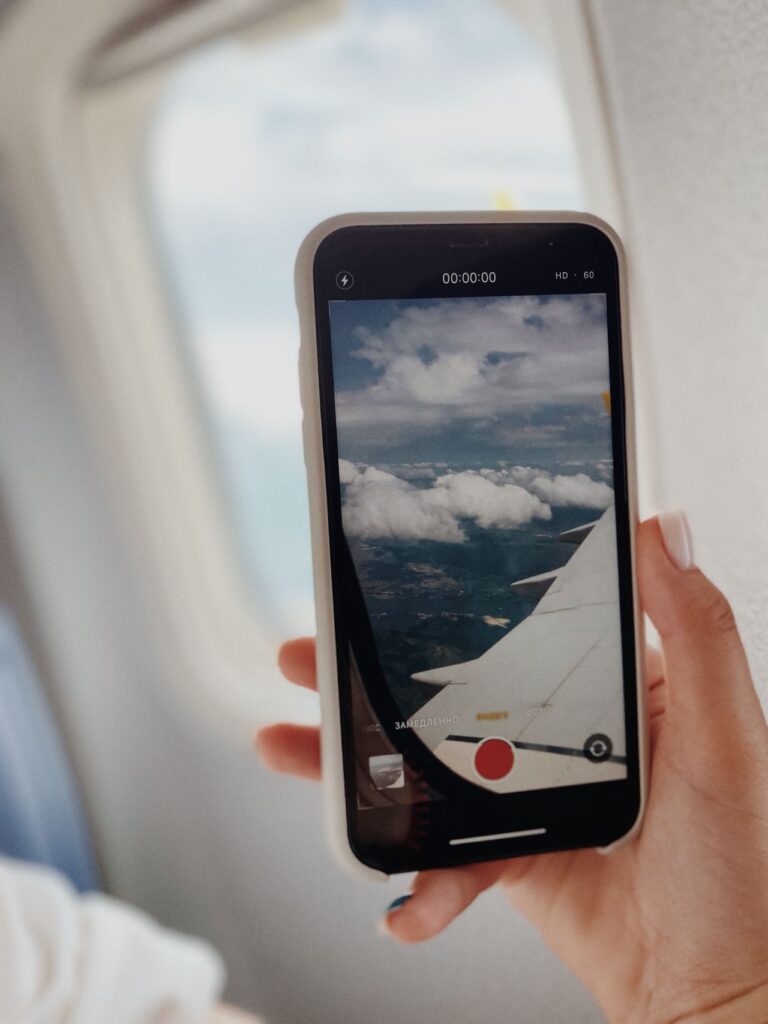
You will make small mistakes. You might take the wrong train, mispronounce a street name, order something unexpected, or walk past an entrance you were trying to find. Experienced travelers make mistakes too.
The useful skill is knowing how to recover. Check reliable information, ask for help, solve the immediate problem, and continue.
Preparation gives you confidence, but flexibility is what turns that preparation into a good trip.
Find Cheaper Flights for Your Vacation
FAQ
How Early Should I Prepare for My First International Trip?
Start planning as early as possible, especially if you need a passport renewal, visa, or travel authorization. Handle important documents and major bookings first, then organize insurance, money, phone connectivity, and packing closer to departure. Recheck official entry requirements shortly before your trip because rules can change.
How Much Cash Should a First-Time International Traveler Carry?
Carry enough local currency for small purchases, transportation, tips where appropriate, and emergencies. Avoid keeping all your money in one place. A combination of cash, a primary card, and a backup payment method is usually more practical than relying on cash alone.
What Should I Keep in My Carry-On Bag for an International Flight?
Keep your passport, travel documents, wallet, phone, chargers, essential medication, valuables, and basic toiletries in your carry-on. A change of clothes is also useful in case your checked luggage is delayed. Always check current airline and security restrictions before packing.
Is Travel Insurance Really Necessary for International Travel?
Travel insurance can be valuable because it may cover certain medical emergencies, cancellations, delays, or baggage problems. Coverage varies significantly between policies, so read the exclusions and limits carefully. Choose a policy based on your destination, trip cost, activities, and existing insurance.
What Is the Biggest Mistake First-Time International Travelers Make?
One of the biggest mistakes is assuming everything abroad works exactly like it does at home. Payment methods, transportation, etiquette, airport procedures, and local customs may be different. Do some research, stay flexible, and avoid scheduling every minute of your trip.