
Affiliate Note: Some links may be affiliate links. We may earn a small commission at no extra cost to you, and we only share recommendations we believe are useful.
Essential Air Travel Tips Before You Reach the Airport
Airports can turn small oversights into unnecessary stress. A slightly overweight suitcase delays check-in, a buried boarding pass slows you at security, and arriving at the wrong terminal can turn a comfortable schedule into a sprint. The most effective air travel tips are therefore less about clever hacks and more about preparation, organization, and leaving enough flexibility for the unexpected.
A smoother airport routine starts before you leave home. Check your documents, understand baggage rules, organize your carry-on, arrive with enough time, and know what you need to do at each stage of the airport journey. Once inside the terminal, focus on reliable information, keep essential items accessible, and avoid creating unnecessary time pressure.
These airport travel tips can help whether you're taking your first flight, traveling internationally, flying with children, or simply trying to make frequent trips less stressful.
Table of Contents
Prepare Before You Leave for the Airport
A smooth airport experience begins before you reach the terminal. At home, you still have time to solve problems involving documents, baggage, transportation, or check-in. Once you're inside the airport, you're working around airline deadlines, security procedures, boarding times, and queues.
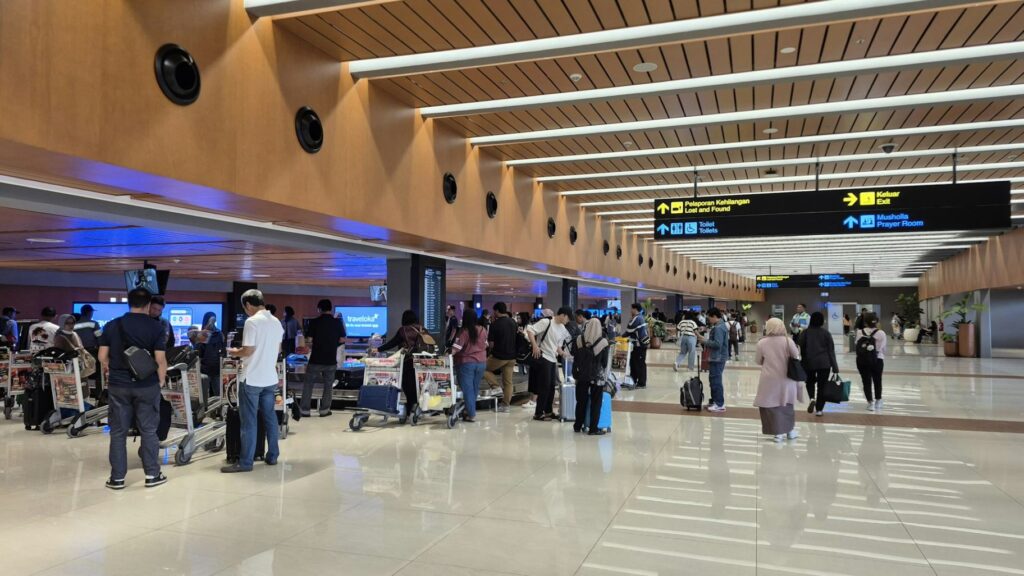
Think of the journey as a sequence: travel to the airport, find the correct terminal, complete any required check-in, drop checked luggage, pass through security, locate the gate, and board. International trips may also involve document checks, immigration procedures, transit requirements, or additional screening.
Keep critical items together in a secure, accessible part of your personal item. Your passport or identification, wallet, phone, medications, charging equipment, boarding information, keys, and necessary paperwork shouldn't be scattered among different bags.
Before leaving home, check current airline communications for flight changes, terminal information, baggage allowances, and check-in requirements. An airline's official app can also provide boarding passes, notifications, gate updates, and booking details in one place.
Preparation cannot prevent delays or operational changes, but it gives you more room to respond when they occur.
Check Travel Documents and Entry Requirements
Few airport mistakes have greater consequences than arriving without the documents required for your journey. Check them deliberately rather than assuming everything is already in your bag.
For domestic flights, confirm which identification is currently accepted by the airline and relevant authorities. For international travel, check your passport's expiration date well before departure. Depending on your nationality and destination, you may also need a visa, electronic travel authorization, proof of onward travel, or other documentation.
Transit requirements matter too. Changing planes in another country can sometimes involve immigration or entry rules even when that country isn't your final destination. Because requirements vary by nationality, route, and airport, verify important details through official government, immigration, embassy, consular, or airline sources.
Keep useful travel information accessible in more than one form when practical. Digital copies cannot replace a required physical passport, but securely stored copies of your itinerary, accommodation information, insurance details, booking confirmations, and important phone numbers may help during a disruption.
Immediately before leaving, physically confirm that you have your passport or ID, wallet, essential medication, and any required documents. A ten-second check is far easier than discovering a missing passport after reaching the airport.
Pack Luggage Strategically and Avoid Common Baggage Problems
Packing for air travel involves more than fitting everything into a suitcase. Consider airline weight limits, security rules, accessibility, breakage, baggage delays, and what you'll need before reaching your destination.
Separate your belongings into three groups: essentials that must remain with you, items you may want during the journey, and belongings that can safely travel in checked baggage. Identification, travel documents, essential medications, keys, valuable electronics, and irreplaceable items generally belong in your cabin baggage when permitted.
Check your airline's current baggage allowance before packing. Size, weight, and number-of-bag rules vary by carrier, route, fare, and cabin class. If you're checking luggage, weighing it at home can prevent last-minute repacking at the airport. Leave some margin below the maximum, especially if you expect to bring purchases home.
Organize your carry-on around accessibility. Keep documents in a protected pocket, charging equipment in a small pouch, and anything that might need to be removed during security screening within easy reach.
If you're checking a suitcase, consider keeping basic toiletries and a change of clothing in your cabin baggage. A delayed checked bag is much easier to manage when you still have medication, chargers, clean clothes, and basic personal items.
Clearly identify your luggage and remove obsolete airline tags or routing stickers. The goal isn't to carry more; it's to keep the right belongings in the right place.
Choose the Right Airport Arrival Time
There is no universal answer to “How early should I arrive at the airport?” The right timing depends on the airport, airline, destination, baggage situation, time of travel, transportation method, and whether additional processing is required.
Use official airline and airport recommendations as your starting point. Pay particular attention to check-in deadlines, baggage-drop cutoffs, boarding times, and gate-closing rules. Scheduled departure is the time the aircraft is expected to leave, not the time you should begin walking toward the gate.
Build your schedule backward. Estimate when you need to reach the gate, then account for walking through the terminal, security, check-in or bag drop, parking, public transportation, and possible delays.
Allow more time when you're:
- returning a rental car
- traveling with young children
- checking unusual or special baggage
- requesting mobility or other assistance
- departing from an unfamiliar airport
- taking an international flight with additional document checks
- traveling during a particularly busy period
Ground transportation is often underestimated. Traffic, parking shuttles, train delays, roadworks, or rideshare complications can affect your schedule before you enter the terminal.
The objective isn't to arrive excessively early. It's to build a realistic buffer around the complexity of your trip. Thirty relaxed minutes near the gate are usually preferable to ten minutes spent running across an unfamiliar terminal.
Make Check-In and Bag Drop Faster
Many passengers can complete much of the check-in process before arriving at the airport. Depending on the airline and itinerary, online check-in may let you confirm your flight, review your seat, enter necessary information, obtain a boarding pass, or pay for baggage in advance.
Some travelers will still need an airport counter. Checked luggage, international document verification, pets, special baggage, accessibility arrangements, ticketing issues, or other circumstances may require staff assistance.
When you enter the terminal, read the signs before joining a line. Large airports can have separate check-in areas by airline, destination, cabin, or service type. Some use self-service kiosks and automated bag drops, while others rely on staffed counters.
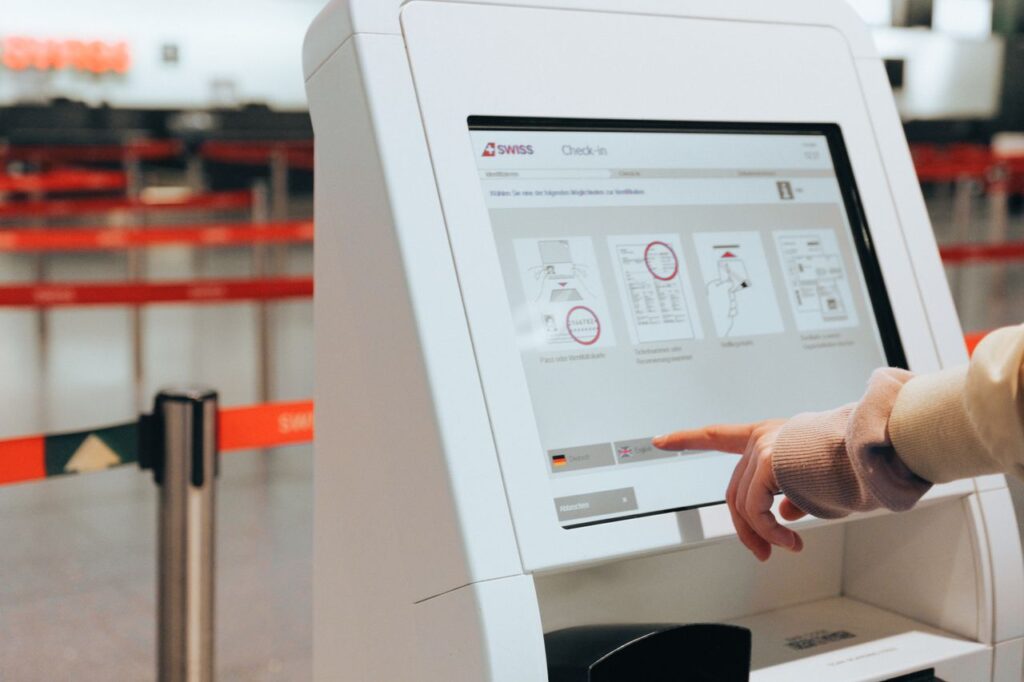
Keep identification and booking details accessible while waiting. If your suitcase needs to be reorganized because of a weight problem, move away from the counter when possible rather than blocking the queue.
After checking a bag, keep the baggage receipt or tracking information. Then confirm the correct route toward security instead of simply following other passengers.
Efficient airport travel isn't about rushing. It's about eliminating unnecessary steps.
Use Online Check-In and Digital Boarding Passes
Online check-in can remove one of the most common sources of airport friction. When your airline offers it, check in before leaving home and confirm that your reservation details are correct.
Install or update the airline's official app while you still have reliable internet access. Sign in, verify your booking, and enable useful notifications if you want alerts about gates, boarding, or disruptions.
A digital boarding pass is convenient, but avoid creating a single point of failure. Phones lose power and apps occasionally stop working. When supported by the airline, save your boarding pass somewhere accessible offline, such as your phone's wallet application. Some travelers also keep a printed copy for complicated international itineraries.
Receiving a boarding pass does not necessarily mean every travel requirement has been completed. The airline may still need to inspect documents, and checked baggage must still be accepted before the relevant cutoff.
Review your boarding information, including passenger name, date, flight number, and boarding time. Gate assignments can change, so continue checking current information at the airport.
The greatest advantage of checking in early isn't just saving time. It gives you information sooner, which makes it easier to understand exactly what remains to be done.
Handle Bag Tags, Kiosks, and Check-In Lines Efficiently
Self-service kiosks typically guide passengers through a series of prompts. Depending on the airline, you may scan your passport, enter booking information, print a boarding pass, or generate baggage tags.
Read the instructions carefully rather than rushing because someone is waiting behind you. A small mistake with a baggage tag can take longer to correct than the few seconds saved by moving quickly.
When attaching your own tag, secure it as directed and keep the barcode readable. Remove outdated routing tags and adhesive labels that could cause confusion.
Before surrendering checked baggage, make sure the routing shown on the tag is consistent with your itinerary. If you have a connection and aren't sure whether your luggage will be transferred automatically or must be collected and rechecked, ask the airline.
Keep your baggage receipt or electronic tracking reference after the bag has been accepted. A contact card inside the suitcase can also provide another means of identification if the exterior tag is damaged.
Use time in a long check-in line productively: prepare documents, confirm your baggage contents, and check where you need to go next.
Get Through Airport Security With Less Stress
Security screening often feels stressful because several things happen quickly and procedures differ between countries, airports, and checkpoints. Instead of memorizing one supposedly universal routine, prepare your belongings and follow the official instructions at the checkpoint you're actually using.
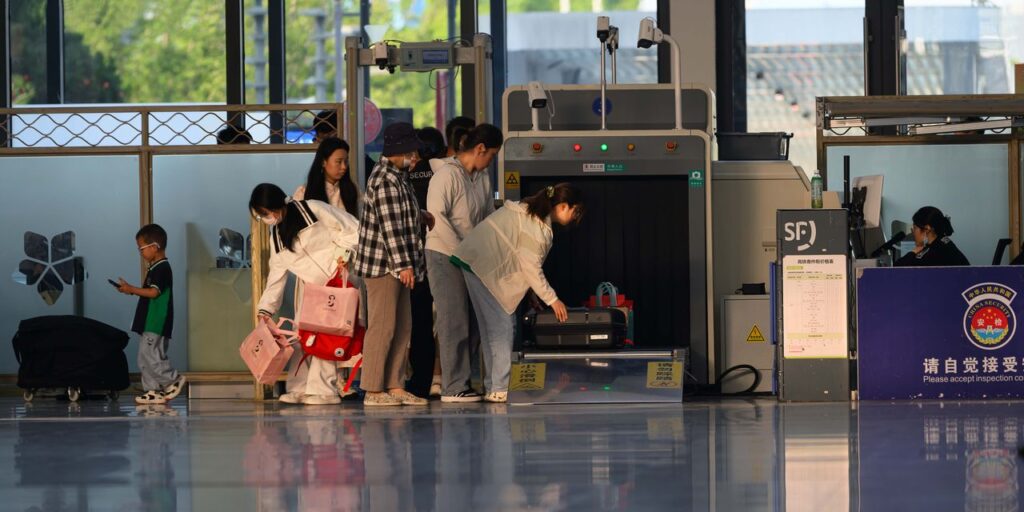
First, verify that the checkpoint serves your departure area. Keep any required identification and boarding documentation accessible, then put them somewhere secure once they have been checked.
While waiting, organize yourself. If signs indicate that particular items need to be removed, prepare them before you reach the conveyor. Secure loose objects such as keys and coins rather than sending many individual belongings through screening.
Don't automatically copy the passenger ahead of you. Different screening equipment may mean different procedures for electronics, liquids, shoes, or other items.
After screening, collect your belongings and move away from the immediate conveyor area before reorganizing your bags when the layout allows. This gives other passengers room to retrieve their property.
The basic strategy is simple: arrive with compliant baggage, read the instructions, keep track of your belongings, and move through each step without unnecessary rushing.
Prepare Yourself and Your Carry-On Before Reaching the Checkpoint
One of the most useful airport security tips is to organize yourself before reaching the screening equipment.
Wear clothing that balances comfort with convenience. Complicated accessories can create additional hassle if local procedures require them to be removed. Shoes should be suitable for walking through a large terminal and manageable if shoe removal is required.
Give your carry-on a logical structure. Small pouches can keep toiletries, chargers, medications, and miscellaneous items from disappearing into the bottom of the bag. If electronics need to be screened separately at your checkpoint, an accessible laptop or tablet compartment saves time.
Before entering the line, deal with items that cannot pass through under applicable rules. For example, you may need to empty a reusable water bottle before screening and refill it afterward.
At the conveyor, keep track of how many trays and bags you've sent through. Phones, laptops, jackets, watches, and small bags are surprisingly easy to forget when your attention is divided.
A few minutes of preparation before the checkpoint can turn a frantic process into a predictable sequence.
Organize Liquids, Electronics, and Restricted Items
Rules involving liquids, gels, aerosols, batteries, electronics, tools, medical supplies, and other restricted items can vary by jurisdiction and screening technology. Check the appropriate official security authority and your airline's dangerous-goods guidance before packing anything you're uncertain about.
Liquids and toiletries are a common source of confusion. Some checkpoints continue to use familiar container and volume restrictions, while others with newer equipment may follow different procedures. Your departure and return airports may not operate the same way.
Electronics are similar. Depending on the checkpoint, laptops, tablets, and cameras may remain in your bag or need to be placed separately. Follow the local instructions rather than relying on what happened on your previous flight.
Pay particular attention to spare batteries and portable power banks. Aviation rules may distinguish between what can be carried in cabin baggage and checked baggage, and capacity restrictions may apply.
Medication, baby supplies, medical devices, and dietary necessities can have different screening procedures from ordinary toiletries. If you require an exception or additional assistance, review official guidance before traveling and allow extra time.
The safest approach is to verify uncertain items before departure rather than assuming a rule from an earlier trip still applies.
Know What to Do When Security Screening Does Not Go as Planned
Even an organized traveler can be selected for additional screening. A bag may require inspection or an object may need closer examination.
If your bag is diverted, wait for security personnel to tell you what to do. Don't reach across barriers or attempt to retrieve it without permission. If asked about an object, answer clearly; dense collections of cables, books, electronics, food, or other ordinary belongings may simply require closer inspection.
If an item cannot proceed through the checkpoint, ask which legitimate options are available. Depending on the airport and timing, you may be able to return it to a vehicle, place it in checked baggage if permitted, give it to a non-traveling companion, ship it, or surrender it. Not every option exists everywhere.
Travelers with medical devices, implants, disabilities, or other circumstances that can affect screening may find it useful to research applicable assistance procedures in advance.
Once the inspection is complete, perform a quick possession check: phone, wallet, identification, laptop, jacket, watch, and every piece of cabin baggage.
Additional screening is inconvenient, but staying attentive helps prevent one delay from creating another.
Navigate the Airport Terminal Like an Experienced Traveler
After security, establish your priorities before wandering around the terminal.
Start by verifying your current gate on an airport display or through official airline information. Then determine how far away it actually is. At a large hub, reaching another concourse may involve long walks, escalators, trains, or additional checks.
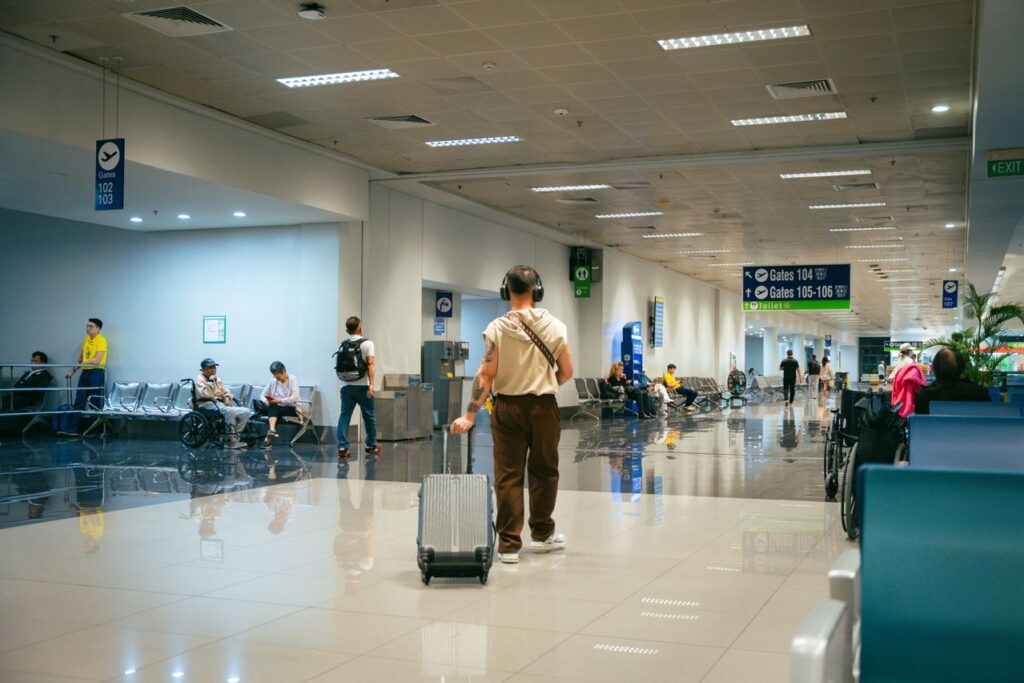
Once you understand the route, decide how to use the remaining time. If boarding begins soon, head toward the gate. With a longer wait, you may have time to eat, work, shop, visit a lounge, or find a quieter seating area.
Remember that boarding usually begins before scheduled departure. If you tend to become absorbed in work, reading, or shopping, set an alarm and continue monitoring flight information. Noise-canceling headphones are useful only if they don't cause you to miss important announcements.
Before boarding, handle practical needs while you still have access to terminal facilities. Refill water, charge devices, download entertainment, buy food if necessary, use the restroom, and make sure medication is accessible.
A terminal feels far less stressful once you know your gate, understand how long it takes to reach it, and can use the remaining time intentionally.
Find Your Gate Early Without Spending the Entire Wait There
Locate your departure gate before doing anything optional. You don't need to sit beside it for two hours, but knowing where it is eliminates uncertainty about distance and travel time.
Check airport monitors even when your airline app already displays a gate. Confirm the boarding time and flight status as well. At some international airports, reaching a gate can involve additional passport or security controls.
Once you know the area, look at nearby facilities. Food, restrooms, or charging outlets may become limited farther into the concourse.
You don't need to stand around the boarding lane before your group is called. Crowding the gate entrance rarely gets you onto the aircraft faster. Wait somewhere you can still monitor displays and announcements, then approach when your group or zone is invited to board.
Be more cautious about leaving the gate area as departure approaches. Operational changes can happen quickly, so recheck your flight status if you've been eating, shopping, or sitting elsewhere.
Treat the gate as home base: find it first, understand the surrounding area, and then use the terminal without wondering how far away you are.
Manage Food, Water, Charging, Wi-Fi, and Personal Comfort
Airport comfort mostly comes from taking care of basic needs before they become urgent.
Bring an empty reusable bottle when appropriate and refill it after security if drinking-water facilities are available. Decide whether to eat before boarding based on your flight schedule rather than assuming the airline will provide a substantial meal.
Carry the charging cables and adapters your devices need, and start the journey with a reasonably charged phone. If you use a portable power bank, confirm that it complies with applicable aviation rules. Avoid leaving devices unattended at public charging points.
Public Wi-Fi can be useful for messaging, checking reservations, or downloading entertainment. Make sure you're connecting to the legitimate airport or lounge network, particularly before accessing sensitive information.
Long flights involve plenty of sitting, so use spare terminal time to walk or stretch when practical. Visit the restroom before boarding and keep a light layer accessible if you're sensitive to cold cabins.
The goal is to board fed, hydrated, charged, comfortable, and organized rather than realizing what you need after the aircraft door closes.
Handle Flight Delays and Connections More Effectively
No amount of preparation can control weather, mechanical problems, air-traffic restrictions, or other operational disruptions. What you can control is how quickly you obtain accurate information and respond.
Keep airline notifications enabled and monitor official airport displays. When a delay appears, check whether the gate or boarding time has changed and whether any onward connection may be affected.

If the disruption becomes significant, look at more than one legitimate support channel. The airline app or website may offer rebooking while other passengers are waiting at a service desk. Some situations still require airport staff, especially when itineraries, documents, baggage, or special requirements are complicated.
Keep essential medications, chargers, toiletries, and a small clothing backup in cabin baggage precisely because delays happen. Save relevant receipts and notifications when disruption creates expenses.
For connections, know your onward flight number and schedule before landing. If your first flight is delayed, check the next flight's current status as early as possible.
You cannot remove uncertainty from air travel, but good information, charged devices, accessible essentials, and a clear understanding of your itinerary give you more useful options when something changes.
Stay Organized When Your Flight Is Delayed or Disrupted
When a delay or cancellation is announced, first establish exactly what has happened. Check the airline's official app, website, messages, and airport displays before automatically joining the longest customer-service line.
If rebooking is required, self-service tools may show alternatives immediately. More complicated itineraries involving multiple travelers, checked baggage, international connections, separate tickets, or special requirements may still need staff assistance.
Keep records of major disruptions and related expenses, including boarding passes, booking references, airline messages, hotel receipts, and meal receipts. Passenger rights and airline obligations depend on the route, jurisdiction, carrier, and cause of the disruption.
When you need help understanding whether a qualifying delay or cancellation may entitle you to compensation, you can check compensation eligibility with AirHelp. Always review the applicable airline policies and official passenger-rights rules as well.
If an overnight disruption is likely, address accommodation, food, medication, and communication needs early. Nearby hotels can fill quickly when hundreds of passengers are affected at once.
Keep devices powered, stay close to reliable information, and notify anyone expecting you at your destination. The most useful question during a disruption is not why it happened but what your best available next move is.
Make Airport Connections Without Unnecessary Panic
Connections become easier when you understand the airport layout before traveling. Check whether your transfer may require a terminal change, train or shuttle, another security check, immigration or customs, or baggage collection and recheck.
Connection times cannot be judged by minutes alone. A short transfer at a compact domestic airport is very different from the same connection at a large international hub involving passport control and a terminal change.
As your inbound flight approaches the connecting airport, check your onward gate if information is available. Verify it again after landing because gate assignments can change.
Follow official Connections, Transfers, or equivalent signage. Don't automatically walk toward baggage claim unless your itinerary requires it. Leaving the secure or transit area unnecessarily can cost significant time.
If your inbound flight is late, stay focused rather than running blindly through an unfamiliar building. If you don't know the route, ask airport or airline staff where you need to go and provide your onward flight number and departure time.
Flights booked together on one itinerary may have procedures for missed connections, depending on the circumstances and carrier. Separate tickets can involve additional risk because the second airline may not have the same responsibility when your first flight arrives late.
Treat the connection as a small journey of its own: know the route, know the deadline, keep documents accessible, and postpone shopping or food until you're confident you can reach the next gate comfortably.
Conclusion
A smoother airport experience comes from a series of simple decisions: verify documents, understand baggage rules, pack essential items in cabin baggage, arrive with a realistic time buffer, use check-in tools efficiently, prepare for security, and locate your gate early. The original article emphasizes this combination of preparation and adaptability as the central way to reduce avoidable airport stress.
The common principle is margin. Leave margin in your schedule, suitcase weight, phone battery, connection time, and supply of essentials. When something changes, that extra capacity can turn a potential crisis into a manageable inconvenience.
Stay organized, keep current travel information accessible, and continue checking official sources because gates, procedures, and schedules can change. Experienced travelers aren't necessarily the ones moving fastest through the terminal; they're usually the ones who already know what they need to do next.
Find Cheaper Flights for Your Vacation
Frequently Asked Questions
1. How early should I arrive at the airport before my flight?
It depends on the airport, airline, destination, baggage situation, and travel period. Use the official airline and airport recommendation as your baseline, then add time for factors such as traffic, parking, checked baggage, rental-car returns, family travel, special assistance, international processing, or an unfamiliar terminal. Pay attention to boarding and gate-closing times rather than focusing only on scheduled departure.
2. What should I keep in my carry-on instead of checked luggage?
Keep essential and difficult-to-replace belongings with you when permitted, including identification, travel documents, medication, wallets, keys, phones, valuable electronics, and chargers. A change of clothes and basic compliant toiletries can also be helpful if checked baggage is delayed. Check current aviation rules for batteries and other regulated items before packing.
3. How can I get through airport security faster?
Prepare before reaching the checkpoint. Review applicable rules, organize your carry-on, keep required documents accessible, and make potentially removable items easy to reach. Follow the instructions at your specific airport rather than assuming every checkpoint handles liquids, electronics, shoes, and other items identically. After screening, make sure you've collected every belonging.
4. What should I do first when my flight is delayed or canceled?
Confirm the current status through official airline and airport channels. Check whether your connection is affected and look for rebooking options in the airline app or website while deciding whether staff assistance is necessary. Keep your phone charged, retain important messages and receipts, and research applicable passenger rights, insurance coverage, and airline policies before assuming expenses will be reimbursed.
5. What is the single best tip for reducing airport stress?
Give yourself enough time. Security delays, confusing terminals, baggage issues, and gate changes become much harder to manage when you're already late. A sensible time buffer, combined with organized documents, smart packing, current flight information, and a charged phone, removes many of the most avoidable sources of airport stress.